
Key Takeaways
Morning-of flower delivery can work when the florist, venue, and wedding-day schedule are all aligned. Plan a clear arrival window, a named recipient, and a calm place to keep flowers until they are needed.
- Confirm the florist can deliver to your venue during the agreed window.
- Choose blooms and packaging that can handle the expected travel and weather.
- Work backward from dressing, portraits, and ceremony time to set the delivery window.
- Put quantities, substitutions, delivery details, and contacts in writing.
- Assign someone to receive, inspect, and distribute the flowers.
Check whether morning-of delivery is practical
Having wedding flowers delivered morning of can simplify the days before the wedding, but it leaves less room to recover if plans slip. Start by checking that the florist can serve the venue and that the delivery window fits the day’s schedule. The answer depends on more than distance: venue access, setup needs, and the timing of portraits all matter.
Confirm the florist can fulfill wedding-day orders
Ask whether the florist can make and deliver your specific order on the wedding date, rather than assuming a standard delivery service covers it. Confirm the delivery area, the earliest arrival time, and whether the team can accommodate bouquets, boutonnieres, and any larger arrangements together. If you are still comparing ordering timelines, a 2026 wedding flower timing guide can help frame when to place the order and discuss delivery.
Compare delivery timing with your ceremony and photo schedule
A delivery that arrives before the ceremony may still be too late if the wedding party is already dressed and heading into portraits. Share the schedule with the florist, including when people need their bouquets and when photos begin. Build in enough time for a quick inspection and distribution, not just a drop-off. That buffer is time you can actually use if a box needs attention or a boutonniere needs to be handed to the right person.
Allow for distance, traffic, and venue access
Ask where the flowers will travel from and how the driver will reach the delivery point. A venue entrance may not be the same as the loading entrance, and a morning arrival can coincide with vendor setup or restricted parking. If your plans involve a venue with access details that need checking, a building-access checklist offers a useful reminder to verify practical entry arrangements before the day.
Choose flowers that can handle the schedule
Flowers that look lovely in a studio still need to make it through transport, a handoff, and perhaps a wait before the ceremony. Talk through the conditions they will face with your florist, including how the arrangements will be packed and what care they need after arrival. The goal is not to eliminate every risk, but to choose and handle flowers with the actual schedule in mind.
Prioritize hardy blooms for transport
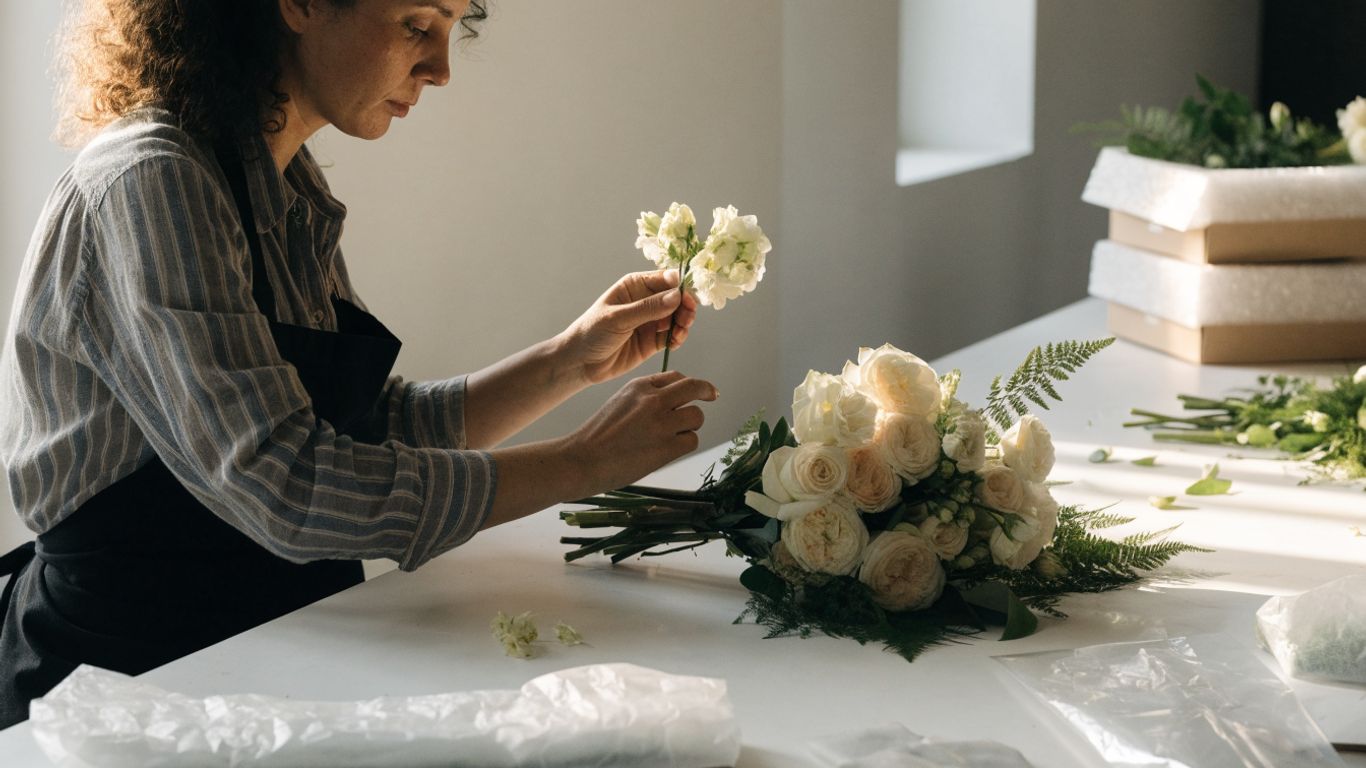
Ask the florist which flowers in your preferred palette are likely to travel well and hold their appearance through the planned delivery window. The answer can depend on the bloom, its maturity, the design, and the weather, so it is better to discuss your specific order than rely on a universal list of “hardy” flowers. If a delicate focal flower is important to you, ask how it will be protected and whether a sturdier supporting mix would make the overall design easier to manage.
Ask how bouquets and boutonnieres will be conditioned
Before confirming the order, ask how each piece will be prepared for transport and what it needs once it arrives. Bouquets, boutonnieres, and vase arrangements may need different handling, so request clear instructions rather than assuming one storage method suits everything. Keep the care notes with the flowers or give them to the person receiving the delivery; small details are easy to lose in a busy getting-ready room.
Consider heat, cold, and other weather risks
Temperature changes can affect flowers while they are being transported or while they wait at the venue. Ask the florist what conditions are suitable for your arrangements and whether any part of the venue is a poor storage choice, such as a sunny window or a chilly entrance. A sheltered, stable spot is usually easier to manage than moving flowers repeatedly as the room fills up.
Build a delivery timeline
A useful delivery plan starts with the moment each arrangement is needed, then works backward to the handoff. Include time for travel, venue access, and a quick check that the order has arrived in good condition. A courier handoff checklist is a reminder that clear delivery details and a named receiver can prevent avoidable confusion, even though wedding flowers have their own handling needs.
Set a firm arrival window with the florist
Agree on a realistic window rather than leaving the arrival time open-ended. The florist should know when the venue can receive deliveries, and the person accepting the flowers should know when to be there. Record the agreed window and ask whom to contact if the driver expects to be early or late. This gives everyone the same reference point on a morning when plans can shift quickly.
Work backward from getting dressed and taking photos
Start with the first time the flowers will be used, whether that is a portrait, a first look, or the walk to the ceremony. Allow time between delivery and that moment for checking the order and distributing pieces to the right people. A simple timeline can make the necessary gaps easier to see:
| Wedding-day moment | Planning question | Useful allowance |
|---|---|---|
| Delivery arrival | When can the venue receive the order? | Confirm an agreed arrival window |
| Inspection | Who will check the pieces? | Leave time to flag missing or damaged items |
| Distribution | When do bouquets and boutonnieres need to be handed out? | Match this to dressing and portraits |
| Ceremony | When must flowers be in place? | Keep a buffer before guests arrive |
Use the table as a starting point, then adjust it to your venue and schedule. If photos happen early, the flowers need to arrive and be distributed earlier too; the ceremony time alone is not enough to set the delivery window.
Schedule time to inspect and distribute each arrangement
Decide who will check the delivery against the order and where the flowers should go next. Make a short inventory of the pieces that need to be handed out, especially if bouquets and boutonnieres are going to different people. Leave a little breathing room after arrival so one unexpected question does not immediately put portraits behind schedule.
Select a florist and confirm the order
A reliable plan is easier to build when the florist understands the venue and the shape of the day. Share your delivery address, access information, schedule, and the number and types of arrangements you need. Once the design is settled, confirm the practical details in writing so there is less to interpret on the wedding morning.
Look for wedding delivery experience in your area
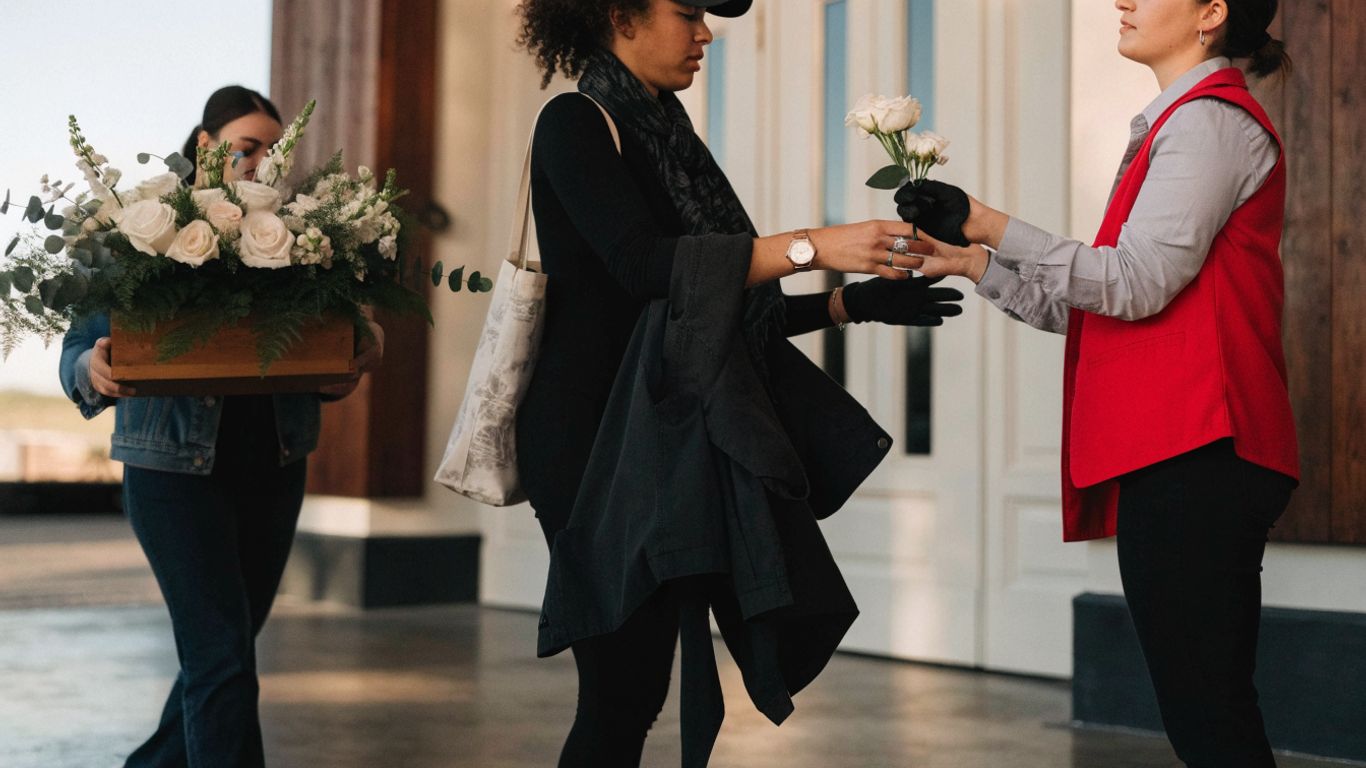
Ask whether the florist has delivered wedding orders to your venue or to similar venues nearby. Local familiarity can help with practical questions about the route, arrival point, or venue procedures, but still confirm the specific arrangements for your date. If you are choosing among florists, look for clear answers about what they can deliver and when, rather than relying on assumptions based on a general service description.
Clarify what is included in delivery, setup, and handling
Ask whether the order is a handoff at the entrance, delivery to a room, or placement of arrangements at specified locations. Confirm who carries the flowers inside and whether the venue requires advance coordination for deliveries. A few details that seem minor during ordering—such as which door to use or where a centerpiece belongs—can become stressful if nobody owns them on the day.
Put varieties, quantities, substitutions, and timing in writing
A written order gives the couple, florist, and recipient a shared reference if the morning becomes hectic. Make sure it reflects the agreed design, counts, delivery address, timing, and the process for any substitutions. Other event details can also shape the setting: for example, wedding signage ideas may help you think through how guests and vendors will find the right locations, though signage does not replace direct delivery instructions.
Plan the handoff at the venue
A delivery is not complete just because the flowers reach the property; someone needs to accept them and know what happens next. Choose a person who can be available during the delivery window and is comfortable contacting the florist if something is unclear. Treat this handoff as a small, defined responsibility rather than another task that will somehow take care of itself.
Name a recipient who will be available to accept the flowers
Choose one person who will be at the venue, know the order is coming, and have time to receive it. Share the florist’s contact information and a copy of the order so the recipient can check the delivery without tracking down the couple. For clarity, write down who is responsible for each part:
- The recipient meets the driver and confirms the delivery has arrived.
- A designated helper checks the bouquets, boutonnieres, and other pieces against the order.
- Another person distributes personal flowers to the wedding party.
- The venue contact directs any arrangements that need to be placed on site.
Keep the roles simple and tell each person what they are responsible for before the wedding morning. That way, the recipient is not left trying to manage every flower and every venue question alone.
Share loading instructions, parking details, and a backup contact
Send the florist the correct entrance, parking or loading instructions, and any restrictions on arrival. Give the driver a contact who will answer during the agreed window, plus a backup person in case the first contact is unavailable. If you are organizing several vendors, a quiet, well-arranged home-office setup is a different kind of project, but it offers a handy prompt to think about clear access and a reliable point of contact; the wedding venue still needs its own specific instructions.
Decide where bouquets and arrangements should be stored
Before the delivery, ask the florist what storage conditions the flowers need and identify a suitable spot at the venue. Make sure the recipient knows which pieces should stay together and which should go directly to a room or table. If you are also coordinating family belongings or other deliveries, a Taylor Family Store resource on coordinating estate-sale logistics is a separate subject, but it underscores why naming a responsible contact can make a handoff easier to manage.
Prepare for delays or last-minute changes
Even a careful plan cannot control every traffic delay or schedule change. What you can do is make sure people know what to do if the delivery window slips, the venue entrance is unavailable, or a flower needs attention. A calm fallback plan is more useful than expecting the morning to run perfectly.
Identify a backup plan if the delivery runs late
Agree in advance on who will call the florist if the order has not arrived by the end of the window. Ask what updates the florist can provide and whether there is a practical alternative handoff point at the venue. Keep the couple out of the first round of logistics if possible; a coordinator, relative, or trusted friend can handle the call while the wedding schedule continues.
Know how to keep flowers hydrated and protected
Ask the florist for care instructions specific to the arrangements and follow them as soon as the order arrives. Keep flowers away from direct sun, extreme temperatures, and unnecessary handling, while using the storage method the florist recommends. Avoid improvising with water or containers if you are unsure; the recipient can check the instructions or contact the florist.
Confirm who can contact the florist on the wedding day
Give the designated contact the florist’s name, phone number, order details, and the agreed delivery window. Make sure the contact has permission to discuss practical changes, such as a revised meeting point or a small timing adjustment. For inspiration on ways couples plan the larger floral order and delivery, the wedding flower delivery guide can be a useful companion to your florist’s specific instructions.
Conclusion
Morning-of delivery can feel straightforward when the timing, access, flower care, and handoff are settled before the wedding. Confirm the details with the florist, leave a usable buffer in the schedule, and give one trusted person clear responsibility for receiving and distributing the flowers. Then the couple can spend less of the morning solving logistics and more of it getting ready.
Frequently Asked Questions
How early should wedding flowers arrive on the wedding day?
Set the arrival window by working backward from when the flowers are first needed for portraits or the ceremony. Include time for venue access, inspection, and distribution, and confirm the window with the florist.
Can wedding flowers be delivered the morning of the ceremony?
They can be, if the florist can fulfill the order and the timing suits the venue and wedding schedule. Confirm availability, delivery access, and an arrival window before relying on morning-of delivery.
Who should receive the flowers at the venue?
Choose a reliable person who will be there during the delivery window and can check the order. Share the florist’s contact information and the written order with them in advance.
What information should I give the florist?
Provide the complete venue address, delivery window, loading or parking instructions, venue contact details, and a phone number for the day. Confirm the arrangement list and any agreed substitutions in writing.
How should wedding flowers be stored after delivery?
Follow the florist’s instructions for the specific flowers and arrangements. Identify a suitable location in advance and keep the flowers protected from conditions the florist advises against.
What if the delivery is running late?
Have a named contact call the florist when the agreed window passes or when an update is needed. Decide in advance whether there is another suitable handoff point and who can coordinate with the venue.
Should I schedule time to check the flower order?
Yes. Allow enough time after the delivery to check that the expected pieces have arrived and distribute them before photos or the ceremony. A small buffer can help keep a minor issue from disrupting the schedule.