
Key Takeaways
A beautiful floral backdrop feels like part of the wedding, not a prop brought in at the last minute. Let the venue, your photo plans, and practical setup needs guide the choices.
- Match the backdrop’s style and scale to the venue.
- Choose flowers and colors that work with the wedding palette and season.
- Check dimensions, sightlines, lighting, and guest movement before settling on a location.
- Compare the full cost of fresh, dried, faux, rental, and DIY options.
- Confirm installation, photography plans, and a weather backup in advance.
Choose a style that suits your wedding
A floral backdrop can feel airy and understated or lush enough to become the room’s main focal point. The right choice depends on the setting as much as the flowers: a design that feels at home in a garden may look out of place in a formal ballroom. Think about where guests will see it and how it will appear in photographs. A little restraint often makes the display feel more considered.
Match the backdrop to your venue’s character
Start with the surfaces, shapes, and natural features already in the space. A brick wall, old timber beams, or a garden view can add texture without competing with the flowers, while a clean modern room may benefit from a more sculptural arrangement. Consider how guests move through the venue, too; a backdrop should complement the room rather than interrupt its flow. That same attention to how people use a space comes into play when planning functional spaces, even though a wedding venue has its own distinct needs.
Compare arches, floral walls, and hanging installations
An arch creates an open frame around the couple, while a floral wall gives the image a fuller, more continuous field of color. Hanging flowers can add height and softness, but they depend on the venue’s ceiling and installation rules. Before deciding, compare what each format contributes to the photograph and the room.
| Format | Visual effect | Useful consideration |
|---|---|---|
| Arch | Open, framed focal point | Leaves more of the setting visible |
| Floral wall | Dense, consistent background | Needs enough floor space and coverage |
| Hanging installation | Airy, overhead dimension | Requires suitable rigging and clearance |
A format that looks striking on its own may not suit every photo location. For outdoor settings, browse outdoor wedding backdrop ideas for a sense of how a floral display can sit within a larger scene, then check what your own venue can safely accommodate.
Balance statement flowers with simpler greenery
Large, high-contrast blooms draw the eye, but a backdrop made entirely of statement flowers can feel visually heavy. Greenery and smaller blooms give the design breathing room, especially when the arrangement will sit behind a couple in close-up portraits. Choose one or two focal elements, then let the supporting textures create a more natural transition around them. This balance can make the display feel abundant without obscuring the people in front of it.
Draw inspiration from your wedding theme
Use the wedding’s theme as a starting point rather than a strict formula. A relaxed garden celebration might call for loose shapes and foliage, while a more formal event could suit a tidy outline and a narrower color range. For playful pink inspiration, a floral photo moment offers one direction to consider; adapt the idea to your palette and venue instead of copying it wholesale. The best result feels connected to the day without repeating every decorative detail.
Select flowers and colors
Color is often the first thing guests notice, but texture and flower shape matter just as much in photographs. Look at your wedding palette alongside the room’s existing colors, including the walls, flooring, and nearby furnishings. Think about whether the backdrop should blend softly into the setting or provide a clear point of contrast. Small choices made together tend to feel more intentional than a single color picked in isolation.
Coordinate blooms with your wedding palette
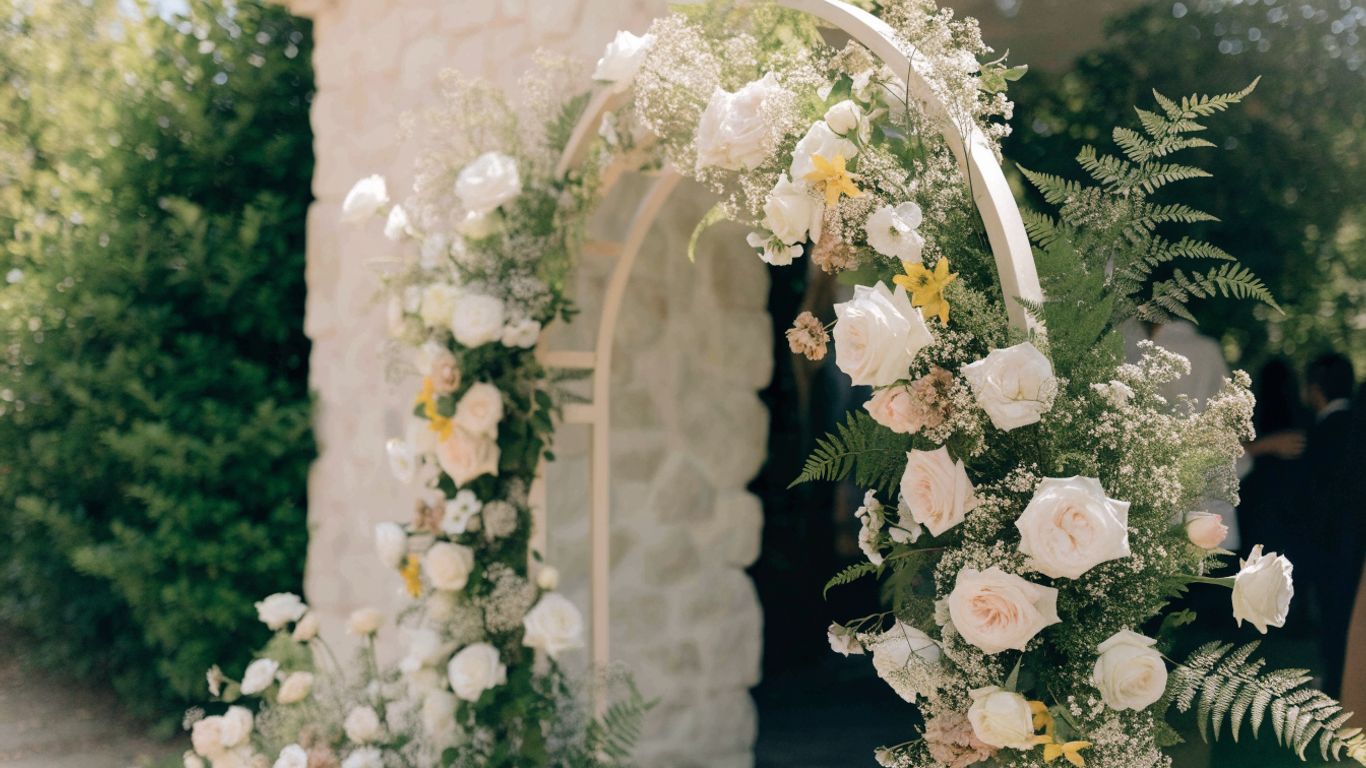
Choose colors that sit comfortably beside the wedding party’s clothing and the room itself. White and pale flowers can look luminous against a darker background, while saturated blooms may stand out more clearly in a bright space. If you want a vivid accent, repeat it in a few places rather than scattering many competing shades across the display. When considering finishes around a venue, a separate design decision such as Cambria designs may offer ideas about how color and surface texture work together, though the backdrop should still suit the wedding space.
Combine focal flowers with seasonal filler blooms
A few focal flowers can establish the look; smaller seasonal blooms and greenery fill out the shape and add variation. Ask a florist which options are likely to be available around your wedding date, since substitutions may affect both color and texture. A seasonal plan can also help the design feel connected to its setting rather than assembled from unrelated elements. For couples organizing photo ideas around a particular time of year, spring content planning can prompt broader seasonal thinking, even though wedding floral choices need their own discussion with a florist.
Decide between fresh, dried, and faux flowers
Fresh flowers bring natural variation and may suit a design built around scent or delicate details, but they need careful handling and timing. Dried flowers offer a different texture and can suit warm, muted palettes. Faux flowers can be useful when consistency or reuse matters, although quality and finish vary; a display can combine types if the result looks cohesive. Compare samples in the actual venue light when possible, since color and texture can read differently in person than in a photograph.
Account for fragrance, pollen, and guest sensitivities
A display near a seating area or photo line may bring flowers close to guests for longer than a ceremony arrangement would. Ask your florist about strongly scented blooms and pollen, and make room for alternatives if someone in the wedding party has a known sensitivity. Placement can help, too: a more aromatic arrangement may work better away from food and close-contact portraits. A little planning here keeps the backdrop welcoming without making its appearance the only consideration.
Find the right backdrop size and format
The backdrop should be large enough to read clearly in a photo, but not so large that it overwhelms the location. Measure the available width and height, then check what will remain clear around doors, walkways, furniture, and any overhead features. Keep in mind that the camera frame may include more of the room than you expect. A quick conversation with the venue and photographer can prevent a design that looks right on paper but feels cramped on the day.
Measure the display area and available clearance
Measure the wall or floor area where the backdrop will stand, including the height available above it. Check the route from the delivery point to the setup area and note any narrow doors, steps, or lifts. These details affect what can be brought in and how the structure can be assembled. Ask the venue to confirm the measurements rather than relying only on a quick visual estimate.
Choose a design that frames couples and groups
A backdrop intended for couple portraits may not have enough width for a full family group. Consider the widest photo you expect to take and leave a little extra room on either side so people do not appear squeezed against the edge. For a large group, an open arch may show more of the surrounding setting, while a broader wall can give a consistent background. Your photographer can help judge the framing before you commit to a format.
Consider how much floral coverage you need
Full coverage creates a strong, uninterrupted floral effect, whereas partial coverage leaves more of the structure or wall visible. Each can look intentional if the shape is designed around the camera angle. Think about whether portraits will be taken only from the front or from several directions, then decide which areas need flowers most. A lighter arrangement may be sufficient if the backdrop sits against a distinctive wall or view.
Check venue rules for freestanding structures and installations
Ask about restrictions on attaching items to walls, ceilings, or floors, and find out whether the venue requires approved installers. Freestanding frames still need a stable base and enough clearance, particularly in busy areas. If a metal structure is part of the design, confirm who is qualified to install and secure it; practical metalwork hiring checks can be useful background when discussing experience and materials. Get the venue’s approval before finalizing the plan.
Plan the photo location and lighting
A backdrop’s appearance changes with the light around it, so the most beautiful flowers are only part of the picture. Consider when the portraits will happen, where the light falls at that time, and what will sit beyond the display. A good location gives the photographer room to work while keeping guests from bunching into the shot. Take a few test photos if you can, especially if the venue has strong windows or outdoor exposure.
Position the backdrop for flattering natural light
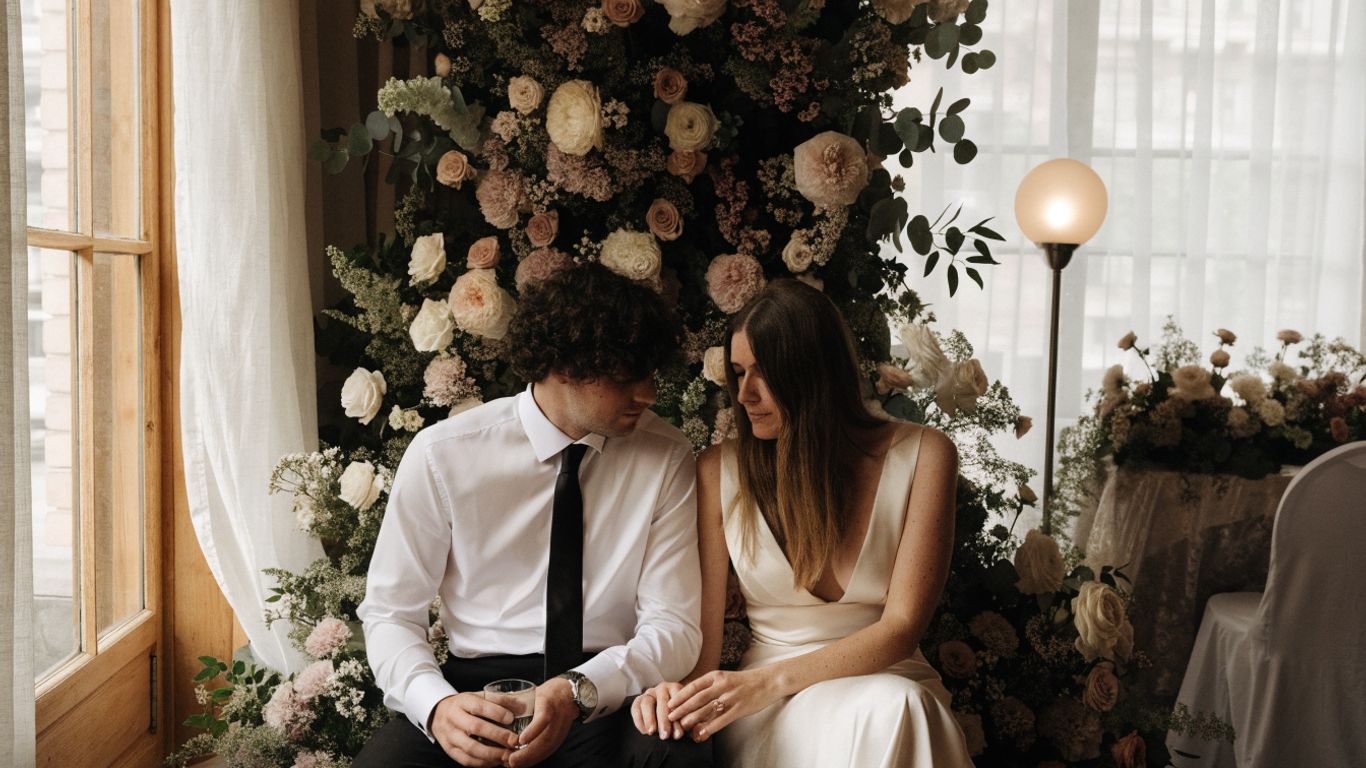
For daylight portraits, look for soft, even light rather than a bright beam falling directly on the couple or flowers. A spot near a window may work well if the light is indirect, while an outdoor location can change quickly as the sun moves. Ask your photographer to visit the space or review photos taken at a similar time of day. Timing and position can make a greater difference than adding more flowers.
Avoid glare, harsh shadows, and distracting backgrounds
Check what the camera will see behind and around the display, not just what is visible when standing directly in front of it. Reflections from glass or polished surfaces may catch the light, and direct sun can cast strong shadows across faces. Shift the backdrop, adjust the angle, or use a different corner if a distracting feature keeps entering the frame. A brief photo test helps reveal issues that can be easy to miss while setting up.
Leave space for photographers and guests to move
A photo area works better when guests can approach, take a picture, and move on without blocking a doorway or service route. Leave clear space for the photographer to step back and change angles, especially when larger groups are expected. A few practical points to include in the layout are:
- A clear path for guests to enter and leave the photo area.
- Enough room behind the photographer for a wider framing.
- Space for mobility devices and larger groups to turn comfortably.
- A nearby place for guests to wait without entering the shot.
These details keep the photo area comfortable as well as attractive. Share the expected group sizes with the photographer and venue so that the space can be arranged around real use, not only the backdrop itself.
Check how the display will look in wide and close-up shots
Wide shots show the relationship between the backdrop and the venue, while close-ups reveal flower detail and any gaps in coverage. Ask your photographer which angles they expect to use and make sure the design works from those viewpoints. A strong central arrangement may look lovely in a portrait but sparse in a wide frame, or vice versa. A short test session can help you decide whether to adjust the flower placement or camera position.
Set a realistic budget
A backdrop budget should cover more than the flowers themselves. Structure, delivery, installation, rental duration, and removal can all affect the final price. Decide which parts matter most in the photographs, then compare options against the full cost rather than the initial quote alone. A straightforward planning log can keep estimates in view; a tracking sheet is one example of a simple tool for recording measurements over time, though wedding expenses call for their own categories and figures.
Compare florist, rental, and DIY costs
Ask for itemized estimates so you can compare like with like. A florist may design and install a custom arrangement, a rental can provide a ready-made format, and DIY may offer more control over materials while requiring time and transport. The lowest starting price is not necessarily the lowest total once setup and teardown are included. Decide how much work you want to take on during the days around the wedding.
Prioritize flowers where they will appear in photos
Spend first on the areas most likely to be visible in the frames you care about. Flowers at eye level and around the outer edge of a portrait may have a greater visual impact than dense coverage hidden behind the couple. That does not mean every display should be sparse; it means planning coverage around the actual composition. Ask your florist and photographer to look at the same reference images before trimming the design.
Ask about delivery, installation, and teardown fees
Confirm when the supplier can access the venue, how long installation takes, and who will dismantle the display. Ask whether transport, setup, structural supports, and removal are included in the quote. These costs can vary with the venue’s access and the complexity of the installation, so get the details in writing. Clear responsibilities also help avoid last-minute requests landing on family or wedding-party members.
Explore ways to reuse ceremony flowers at the reception
Some arrangements may be moved from the ceremony area to the reception, provided the schedule and design allow for it. Discuss this early with the florist and venue, including who will move the flowers and whether the changeover time is realistic. A plan that works on a timeline can reduce waste and give favorite blooms a second moment in photographs. Keep the display secure and attractive in its new position rather than assuming it will fit without adjustment.
Coordinate setup and photography
Even a well-chosen backdrop can be stressful if no one knows who is responsible for it on the day. Confirm the setup plan with the florist, venue, and photographer, and make sure each person has the information they need. Include access times, measurements, expected photo groups, and any restrictions in one shared note. That small bit of coordination leaves more time to enjoy the day itself.
Confirm who will install and secure the structure
Name the person or team responsible for assembling and stabilizing the display, and confirm what they will bring. Check whether the frame needs a particular floor surface, anchoring method, or venue approval. Do not assume a structure will be safe simply because it is freestanding; it should be stable for the location and expected conditions. Keep guests away from the setup area until the installation is complete.
Schedule delivery and setup around venue access
Ask the venue when suppliers can arrive and how much time they have to work before guests enter. Build in time for unloading, assembly, flower placement, and any adjustments after the photographer sees the location. If the display must be moved after the ceremony, confirm who will handle it and when. A clear schedule helps prevent setup from overlapping with other deliveries or room preparations.
Share the backdrop plan with your photographer
Send the photographer the backdrop dimensions, location, reference images, and expected group sizes before the wedding. Ask which angles they plan to use and whether the design needs extra width or open space around it. Mention the schedule and any restrictions on moving the structure. The photographer can then flag practical concerns while there is still time to make changes.
Prepare a weather backup for outdoor displays
Outdoor light and weather can shift, even when the forecast looks promising. Choose an indoor alternative or a covered location before the event, and confirm that the backdrop can be moved there safely. Consider wind, rain, and uneven ground when planning any freestanding structure. The backup should work for photos as well as for the installation, so check its lighting and background in advance.
Conclusion
A floral backdrop for wedding photos comes together through a series of thoughtful choices: a style that suits the venue, flowers that fit the palette, enough space for people and cameras, and a plan for costs and setup. When those practical details are settled early, the flowers can feel like a natural part of the celebration—and give you a setting you’ll be glad to see in the photographs.
Frequently Asked Questions
How early should I choose a floral backdrop?
Begin once you know the venue and general photo plan, so you can check dimensions, access, and installation rules before choosing a design. Confirm flower availability and the final setup schedule with your florist closer to the wedding.
What type of floral backdrop works best for wedding photos?
It depends on the venue, the number of people in the photos, and the look you want. An arch leaves the surroundings visible, while a floral wall creates a fuller background; hanging installations can add height if the venue allows them.
Should a wedding floral backdrop use fresh or faux flowers?
Fresh, dried, and faux flowers each create a different look. Consider season, budget, timing, scent, and whether you want to reuse the display, then compare samples in the actual venue light.
How wide should a floral backdrop be for group photos?
It should accommodate the widest group you expect, with extra room so people do not look pressed against the edges. Ask your photographer about framing and check the available floor space before settling on measurements.
Where should a floral backdrop be placed for the best lighting?
Look for soft, even light at the time portraits will be taken. Avoid direct sun, strong reflections, and busy backgrounds, and ask your photographer to check the location or take a test photo.
Can ceremony flowers be reused for reception photos?
Often, some arrangements can be moved, but the design, timing, and staff availability matter. Agree on the move with the florist and venue ahead of time, and confirm that the flowers will suit the new location.
What should I ask the venue before installing a backdrop?
Ask about attachment rules, structural approval, access times, delivery routes, and setup or teardown requirements. For outdoor displays, also confirm the venue’s weather policy and identify a backup location.