Key Takeaways
A bouquet that feels like yours comes from balancing personal taste with the practical details of your day. Start with the mood, then refine the flowers, palette, shape, and finishing touches.
- Describe the feeling you want before choosing specific blooms.
- Use inspiration as a guide, not a design to copy exactly.
- Consider season, color, bouquet scale, and how it will feel to carry.
- Coordinate details with your dress and any meaningful accessories.
- Give your florist clear priorities and room to suggest substitutions.
Define your wedding vision
A bridal bouquet that matches my vision begins with more than a list of favorite flowers. It should feel at home beside your dress, in your venue, and in the overall atmosphere of the day. A few early decisions about mood and setting make the later choices much easier.
Identify the mood you want to create
Think about the feeling you want the bouquet to bring to the ceremony: soft and romantic, lively and colorful, sculptural and modern, or relaxed and garden-inspired. You do not need to settle on a precise flower list yet. Start with a few adjectives and images that capture the feeling, then notice which qualities keep returning. Exploring scent by mood, as with the Sniff App, is one example of how personal preferences can be approached through atmosphere and memory.
A short set of notes can keep that mood clear as you collect ideas:
- Choose two or three words for the overall feeling.
- Save images for color, shape, or texture—not only complete bouquets.
- Note details that do not feel right, as well as the ones you love.
- Decide whether the bouquet should stand out or blend softly into the look.
Those notes are a useful starting point, not a set of rules. Let them help you explain the feeling to your florist while leaving room for flowers that are available and beautiful when your wedding arrives.
Gather inspiration without copying one design
Save a small range of references rather than asking one photograph to do all the work. One image might have the right color, another the loose shape you like, and a third an appealing mix of delicate and substantial blooms. The goal is to identify the ingredients behind your taste, then let your florist bring them together in a design suited to you.
Keep the practical details beside each reference: what you like, what you would change, and whether the image reflects your dress or venue. If fragrance is part of how you think about the day, exploring personal preferences through a scent exploration app offers a separate example of collecting ideas around mood and memory. Treat references as prompts rather than a demand for an exact replica.
Match the bouquet to your venue and season
A bouquet should feel connected to its surroundings without disappearing into them. A formal ballroom may suit a more composed arrangement, while an outdoor garden setting can make a loose, varied shape feel natural. Season matters, too: it affects which flowers are readily available and can influence both the palette and the character of the arrangement.
Consider the actual conditions of your venue, including the ceremony location, the length of time you will carry the flowers, and whether the bouquet will be photographed indoors or outside. Practical decision-making often starts by listing needs before weighing options; that approach is also useful in a Boston workspace guide, though the details of choosing a wedding bouquet are entirely your own. Share your date and venue with your florist early so seasonal possibilities can shape the design.
Choose flowers that fit your style
Once you have a mood and setting in mind, begin comparing flowers by their visual qualities rather than choosing only by name. Petal shape, scale, color, and texture all affect the feeling of a bouquet. The most successful mix usually has variety, but still feels like one considered arrangement.
Compare flower shapes, colors, and textures
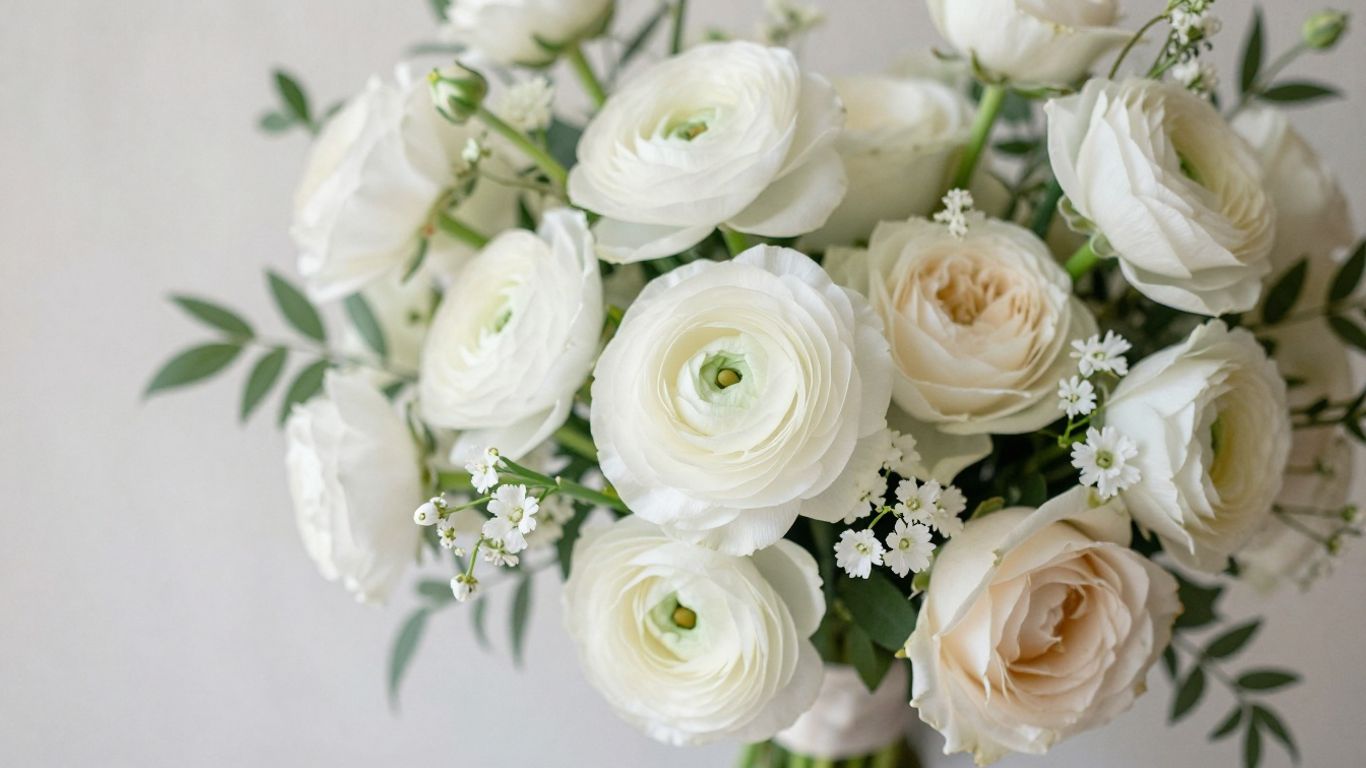
Flowers with rounded heads create a different impression from delicate, branching stems or sharply defined forms. Combining a few silhouettes gives the eye places to rest and places to wander, while variation in texture keeps a bouquet from feeling flat. A florist can help translate broad preferences into flower choices that work together.
A simple comparison can make those visual differences easier to talk through. Use it to describe the effect you like, rather than treating any flower as a required ingredient.
| Visual quality | What it can add | A useful question |
|---|---|---|
| Rounded blooms | A full, soft focal point | Do I want the bouquet to feel lush? |
| Fine or branching stems | Airiness and movement | Would a lighter outline suit my look? |
| Textured petals | A more layered surface | Do I want subtle detail up close? |
| Greenery | Shape and visual contrast | Should the bouquet feel structured or loose? |
A combination does not need to include every quality. Choose the effects that best reflect your style, then let the florist balance them so one feature does not overwhelm the rest.
Explore seasonal blooms and meaningful varieties
Seasonal flowers can offer a natural starting point for a design and may give your florist more options to work with around your date. If a particular flower matters to you because of its color, fragrance, or personal association, mention that early. Your florist can advise whether it suits the season and the overall arrangement.
Meaning can be quiet: a flower associated with a family garden, a color shared with someone important, or a bloom you have loved for years. You do not need to explain every choice to guests for it to belong in the bouquet. A small personal detail can make an otherwise classic arrangement feel distinctly yours.
Consider alternatives for hard-to-find flowers
A favorite flower may be out of season, difficult to source, or less resilient than the design requires. Rather than anchoring the entire plan to one exact variety, describe what you love about it: perhaps its shade, silhouette, softness, or fullness. That gives your florist a clearer basis for suggesting an alternative that preserves the feeling.
Ask which details are essential and which can shift. A thoughtful substitution keeps the bouquet coherent, even when the final flower list changes. It is also helpful to agree on whether the florist should match the overall look or contact you before making a significant change.
Find a color palette that feels cohesive
Color brings flowers, attire, and surroundings into conversation. A bouquet can repeat a wedding color, soften it, or introduce a restrained contrast. Begin with the colors already present in your plans, then choose blooms that complement them rather than forcing every shade to match exactly.
Coordinate blooms with your wedding colors
Bring fabric swatches or reliable color references when you talk with your florist. Screens can shift colors, so a photograph alone may not show whether a shade is warm, cool, muted, or bright. You might choose flowers that echo a key color, or use nearby shades to create a gentle transition.
A bouquet does not have to match the bridesmaids’ attire or table details exactly. Repeating one color in a softer or deeper tone can create connection without making the whole scene feel overly coordinated. The aim is a palette that feels intentional from a distance and pleasing when seen up close.
Use contrast and greenery to add dimension
If every bloom has the same tone and texture, the bouquet can look flat in person and in photographs. A little contrast—a lighter flower beside a deeper one, or foliage around a cluster of blooms—helps define the arrangement. Greenery can frame flowers, add movement, or create a quieter transition between colors.
Think about contrast in terms of degree. A dramatic difference may suit a bold, modern look; a subtle shift often feels gentler and more romantic. Ask your florist to show how the colors and textures will work together, especially if your palette already includes several strong shades.
Account for lighting and photography
The light at your ceremony and reception can change how colors appear. A pale bouquet may read differently outdoors in bright sun than it does in a shaded room, and some subtle tones can be hard to distinguish in photographs. Tell your florist where the ceremony will take place and share any concerns about how the flowers might look in pictures.
Your photographer’s approach can also help you think through how bouquet color and shape will read on camera. For a separate example of planning around image presentation, a photography SEO guide covers making photography visible online; for your wedding, discuss the visual setting directly with your photographer and florist. If possible, review examples photographed in similar light before settling on a very pale or closely matched palette.
Select the right bouquet shape and size
The silhouette of the bouquet changes how it feels beside your dress and how it appears in photographs. Round, cascading, and loose garden styles each create a different outline, and none is automatically the right choice for every wedding. Consider proportion, movement, and comfort together.
Compare round, cascading, and loose garden styles
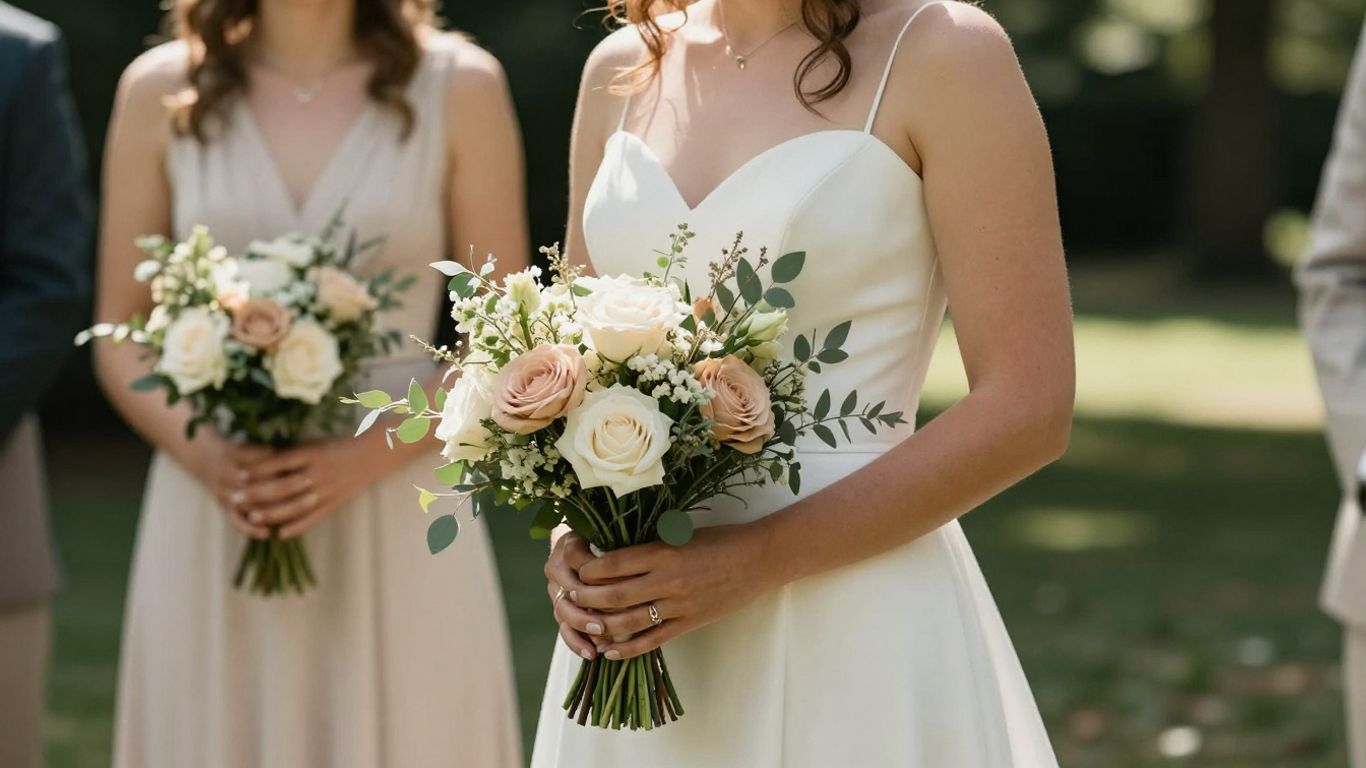
A round bouquet has a more contained outline, while a cascading design draws the eye downward. A loose garden style tends to feel more natural and varied, with visible movement between stems and blooms. These descriptions are starting points; a florist can adjust fullness, length, and looseness to suit your preferences.
Bring examples of shapes you like, and explain what appeals to you about them. You may want the tidy edge of a round bouquet but the varied texture of a garden arrangement. Combining qualities can lead to a design that feels personal instead of tied to a single label.
Balance bouquet proportions with your dress
Think about the bouquet alongside the overall shape and detail of your dress. A highly embellished gown may call for a simpler arrangement, while a clean silhouette can leave room for a more expressive mix of flowers. Scale matters as well: the bouquet should be visible and balanced, not so large that it hides the details you want people to notice.
When discussing size, try to describe how you want the bouquet to appear in your hands and in full-length photographs. Bring a full-length dress image or a sketch if you have one. Your florist can use that context to recommend proportions that complement the look rather than compete with it.
Choose a comfortable shape to carry
You will likely hold the bouquet for portions of the ceremony and for photographs, so comfort is part of the design. Consider its weight, stem length, and how easily you can hold it without gripping tightly. A beautiful shape is less useful if it feels awkward after a few minutes.
Ask to discuss the handle and the way the stems will be gathered. If you have mobility or grip considerations, mention them openly so the arrangement can be planned with your comfort in mind. A quick practice hold before the wedding can also help you find a relaxed position for carrying it.
Plan around your dress and accessories
Details in your attire can guide the bouquet’s finish without dictating every flower. Fabric, embellishments, jewelry, and personal keepsakes all contribute to the overall look. Share those details with your florist, especially if the bouquet will sit close to distinctive fabric or accessories.
Coordinate bouquet details with fabric and embellishments
A bouquet of soft, delicate textures may sit comfortably beside fine lace, while a more structured arrangement can complement a clean, tailored dress. Consider whether the flowers’ scale and surface will draw attention away from beadwork, embroidery, or a striking neckline. The point is not to make every detail identical, but to let the bouquet and dress feel considered together.
A clear photograph of your dress can help your florist understand its color and texture. If the fabric is especially delicate, mention that when discussing stem length and how you plan to hold the flowers. Those small details can shape a finish that looks polished without feeling fussy.
Decide whether to include a wrap, ribbon, or heirloom
A ribbon or wrap can finish the stems and bring in a color, material, or keepsake with personal meaning. It can be understated, or become a visible part of the design. Think about how it will feel in your hand as well as how it will look in close-up photographs.
If you plan to include an heirloom, bring it to the florist conversation or share its dimensions and condition. The florist can help you decide whether it can be secured safely and whether its style suits the bouquet. A small, meaningful detail often feels most special when it has room to be noticed.
Keep personal and cultural details in mind
Traditions, family customs, and personal histories can be part of the bouquet in many ways. You might incorporate a particular color, a meaningful flower, or a detail passed down through generations. Tell your florist what matters to you and what should be handled with care.
There is no single correct way to include a tradition. Some couples prefer a clear reference; others want something subtle that only close family will recognize. Whatever you choose, make sure the detail feels comfortable and authentic to you, rather than added simply because it is expected.
Turn your ideas into a florist-ready plan
By now, you can bring together the mood, flowers, palette, shape, and personal details that matter most. A useful plan gives your florist enough information to understand your priorities, while leaving space for professional judgment and seasonal realities. Clear communication is more helpful than an overly rigid recipe.
Build a clear inspiration board
Collect a few images that show distinct parts of the look: overall shape, flower texture, color, and how the bouquet sits beside attire. Add short notes explaining what you like in each image. A board that includes only finished bouquets can be harder to interpret than one that shows the separate qualities you want to combine.
It can also help to include one or two examples of what you do not want, with a brief explanation. Keep the board focused enough that its direction is easy to see. When you share it, tell your florist which elements matter most and which are simply inspiration.
Set a realistic budget and priorities
Share your budget range early so your florist can recommend a design that fits. Decide which features matter most—perhaps a particular flower, the overall scale, or a meaningful keepsake—and where you are open to flexibility. A florist can then explain how choices such as variety, season, and size affect the plan.
Be direct about your priorities rather than assuming every reference can be reproduced exactly. If you are also comparing vendors, the way a florist website design presents a business can help you understand its visual style, but confirm the details of your own bouquet directly with the florist. Ask what is included in the proposal and which elements could change if availability shifts.
Review flower substitutions and final design details
Before approving the final plan, confirm the bouquet’s shape, approximate size, palette, handle finish, and any personal details. Ask how substitutions will be handled if a flower is unavailable near your date. Agreeing on the qualities that should remain consistent—such as color family or overall silhouette—can make those decisions easier.
A final conversation is also a good time to confirm practical details, including delivery timing and how the bouquet will be cared for before the ceremony. Advice about drain care is a reminder that practical maintenance matters in its own setting; for flowers, rely on your florist’s specific handling guidance. With expectations clear, you can let the arrangement come together without trying to control every stem.
Conclusion
Choosing a bridal bouquet is a process of noticing what feels like you, then shaping that instinct around the practical details of your wedding. Share the mood, proportions, colors, and personal touches that matter most, and stay open to thoughtful alternatives. The result can feel connected to the whole day while still having a personality of its own.
Frequently Asked Questions
When should I choose my bridal bouquet?
Begin discussing the bouquet once you know your wedding date, venue, and general attire direction. Starting early gives you time to explore seasonal options and refine the design with your florist.
How do I choose flowers that are in season?
Tell your florist your wedding date and the flowers or colors you are drawn to. They can explain which varieties are likely to be available and suggest alternatives that preserve the look you want.
Should my bouquet match my dress exactly?
Not necessarily. The bouquet should complement the dress, whether through color, shape, or texture, without competing with its most distinctive details.
How do I choose a bouquet size?
Consider your height, dress silhouette, and how prominent you want the flowers to appear in photographs. Your florist can help you find proportions that feel balanced and comfortable to carry.
Can I request a specific flower?
Yes. Share why that flower matters to you and ask whether it is suitable for your date and design. If it is unavailable, your florist can suggest options with a similar color, shape, or texture.
What should I bring to a florist consultation?
Bring your wedding date, venue information, dress references, color palette, inspiration images, and an approximate budget. Notes about what you like in each image can be especially helpful.
How can I make my bouquet feel personal?
Include a meaningful flower, color, ribbon, heirloom, or other detail that genuinely connects to you. It can be a subtle touch; it does not need to define the entire arrangement.