Key Takeaways
A thoughtful floral plan starts with the venue and the feeling you want to create, then makes room for practical details like weather, access, and setup time.
- Choose a floral style that feels at home in your venue.
- Ask what blooms are likely to be available in your wedding month.
- Place focal arrangements where guests will notice them most.
- Set priorities before comparing itemised quotes.
- Confirm setup, care, and handover details before the wedding day.
Define your floral vision and priorities
A clear vision makes decisions easier, especially when you are choosing between many lovely ideas. Start with the mood you want guests to feel and the spaces they will see, rather than collecting arrangements one at a time. A floral setup wedding day Melbourne couples can make their own should feel connected to the venue, the season, and the couple’s taste.
Choose a style that complements your venue
Look at the room or garden before settling on a floral style. A historic interior, a clean-lined city space, and a leafy outdoor venue each offer different colors, shapes, and textures to work with. Even the flooring can affect the overall impression; a guide to custom timber flooring is a reminder that surface tones and finishes influence how a space feels. Let your florist know what stands out in the venue, and bring a few photos taken in its actual light.
Identify the arrangements that matter most to you
It helps to decide which flowers will carry the most meaning or appear most often in photographs. Some couples care most about personal flowers, while others want a memorable ceremony feature or a beautifully dressed reception table. Set those priorities early, then treat smaller details as flexible. That gives your florist a clearer brief and helps you avoid spreading the budget too thinly.
Gather inspiration while keeping your plans cohesive
Save references that share a mood, palette, or shape, rather than trying to reproduce every image you like. A short collection of examples gives your florist room to interpret the ideas for your venue and the blooms available. You might browse Melbourne wedding floral ideas to see a range of approaches, then note what genuinely suits your own celebration.
A simple inspiration board can keep conversations focused. Choose a few useful reference points:
- A small color palette, including one or two accent shades.
- Images of textures and shapes you like, not only flower varieties.
- A photo of the venue or ceremony area.
- One example of what you would prefer to avoid.
Once you have gathered these, look for the common thread. A concise brief is often more helpful than a long list of individual flower requests.
Choose flowers for Melbourne’s seasons
Melbourne’s weather can shift, and flower availability changes through the year. Rather than fixing every bloom far in advance, start with the season and your preferred colors, then ask your florist which flowers can bring that feeling to life. Flexibility can preserve the look even if a particular variety is unavailable.
Compare seasonal blooms for your wedding month
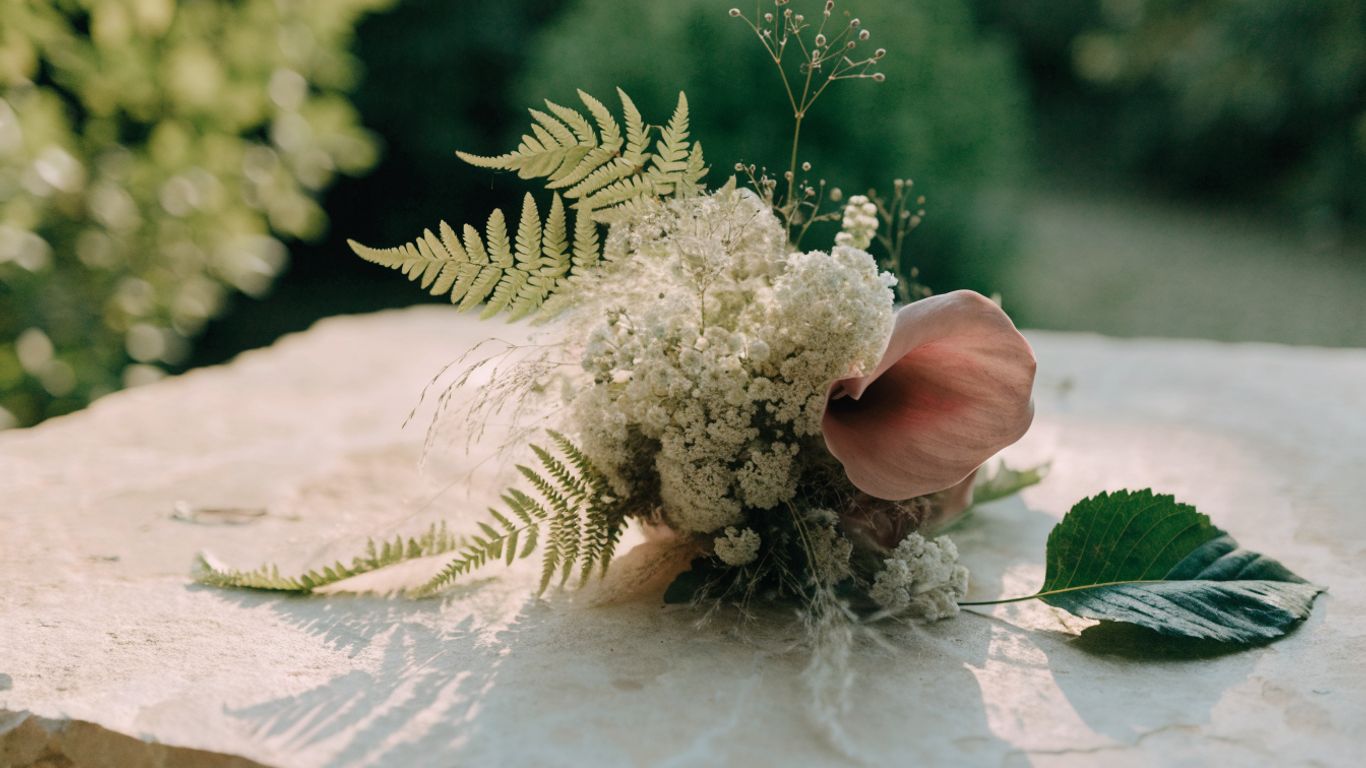
Share your wedding date and ask which flowers are likely to be in season and locally available around then. The answer can help shape both your palette and the arrangement style. Avoid assuming a specific flower will be available at a particular price; supply, quality, and the final design all play a part.
Consider heat, wind, and changing weather
For an outdoor ceremony, discuss where arrangements will sit and how long they will be exposed before guests arrive. Direct sun, warm conditions, and wind may affect the choice of flowers and the way arrangements are secured. If the forecast changes, it is useful to have an agreed indoor alternative or a sheltered placement in mind.
Planning for local conditions is a familiar idea in other kinds of design, too. A custom design renovation guide considers climate alongside practical choices; for wedding flowers, the same broad habit means talking through the actual setting and likely exposure with your florist.
Ask your florist about locally available alternatives
Tell your florist which features matter most—perhaps a certain color, soft texture, or loose garden-like shape—and ask what alternatives could create a similar effect. This keeps the conversation focused on the result, not only on a particular flower name. Agree on how substitutions will be handled, especially for personal flowers and prominent installations.
Plan flowers around your venue and ceremony
The venue gives your floral plan its natural boundaries: available space, access, light, and any rules for décor. Walk through the ceremony area if you can, and picture the view from the guest seats as well as from the aisle. A well-placed arrangement can feel intentional without filling every corner.
Match arrangements to indoor and outdoor settings
Indoor spaces may have existing features that can do some of the visual work for you, while outdoor settings often benefit from arrangements that stand out against foliage or architecture. Think about how flowers will read from a distance and whether the ceremony area needs a clear aisle or unobstructed paths. A location’s scale matters, too: a venue description such as EkoGroup Vila, with its stated 800-square-metre gardens, is a useful prompt to ask how much space an installation needs before choosing its size.
Decide where focal installations will have the greatest impact
Choose one or two places where flowers can frame a meaningful moment, such as the ceremony backdrop or the entrance to the reception. Then consider whether smaller arrangements can echo that feature without competing with it. The strongest plan often has a clear visual anchor and enough breathing room around it.
Check venue rules for candles, hanging décor, and flower petals
Ask the venue what is allowed before finalizing any installation or aisle detail. Rules can cover hanging décor, open flames, petals, attachment methods, and when suppliers can enter the space. Keep the answers in writing and pass them to the florist so a design can be adjusted before the wedding week.
Coordinate the reception floral design
Reception flowers should feel like part of the same story as the ceremony, but they also have a job to do around tables, service, and conversation. Start with the room layout and guest count, then choose arrangements that suit the available surface area. A few carefully considered details can make the whole room feel finished.
Select table arrangements to suit your layout
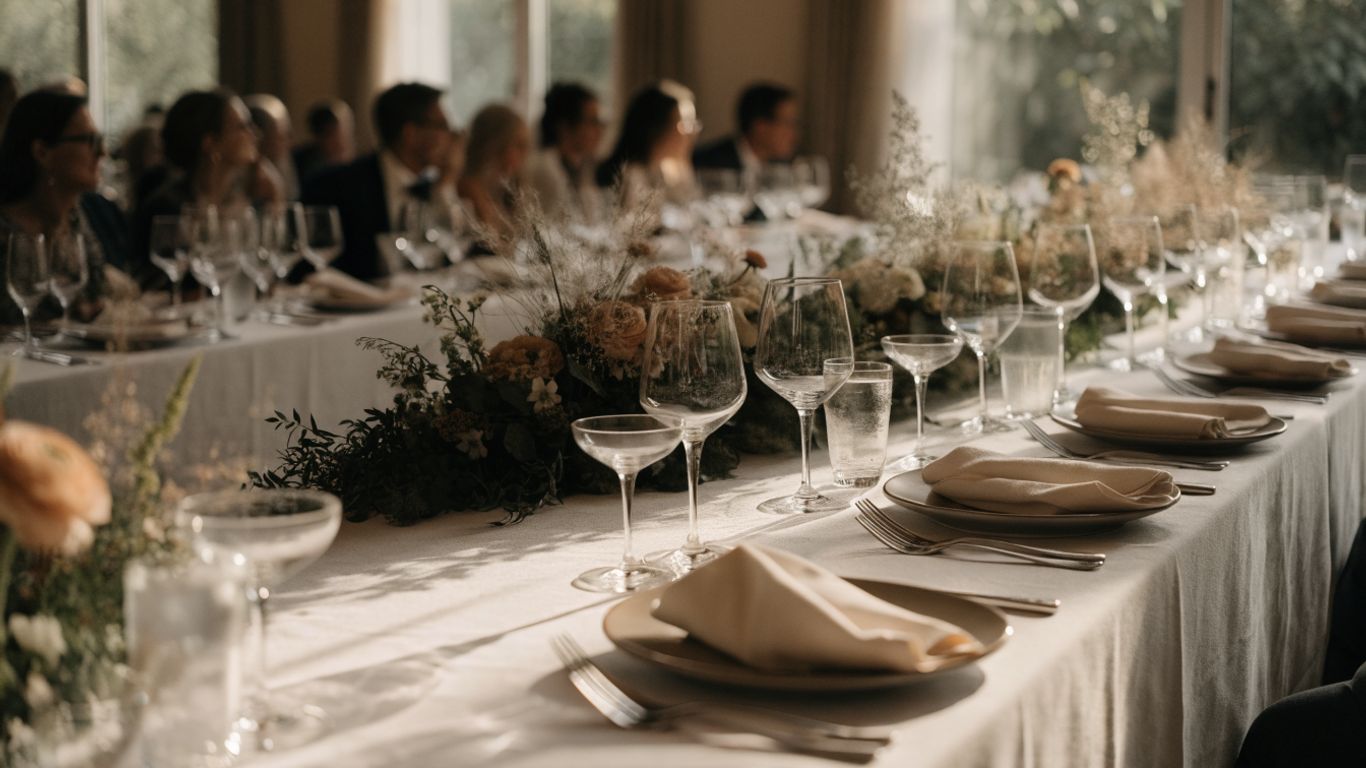
The right arrangement depends on whether guests will sit at long tables, round tables, or a mix of both. Long tables can suit a repeated sequence of low vessels, while round tables often work well with one compact centrepiece. Check the table dimensions with your venue, and discuss how linens, candles, and place settings will fit alongside the flowers.
Balance centrepieces with sightlines and place settings
Guests should be able to see one another and use the table comfortably. Ask your florist to consider arrangement height, width, and stability, especially where food and shared dishes need room. As you compare ideas, a simple distinction between arrangement types can help clarify what to request:
| Arrangement approach | What it can suit | Practical point to check |
|---|---|---|
| Low and compact | Conversation-focused tables | Leave room for place settings and shared dishes |
| Taller and narrow | Tables where overhead height is available | Check sightlines from seated positions |
| Repeated small vessels | Long or mixed-layout tables | Confirm how many vessels fit each table |
Use these as starting points rather than fixed rules. Your table size, room proportions, and preferred look should guide the final choice.
Repurpose ceremony flowers where practical
Some ceremony arrangements may work again at the reception, but the plan needs to account for their size, weight, and movement between spaces. Ask whether the florist can relocate them within the available setup window, and where they could be placed once they arrive. Reuse is most successful when it is planned as part of the design rather than added as a last-minute task.
Set a realistic floral budget
A useful budget begins with a clear sense of what is included, not just a total number at the bottom of a quote. Costs can vary with the flowers chosen, the scale of arrangements, and the work needed to install them. The phrase floral setup wedding day Melbourne can cover anything from a few personal flowers to a larger set of ceremony and reception arrangements, so define your scope before comparing proposals.
Request an itemised quote from Melbourne florists
Ask for a quote that separates the main arrangements and services, so you can see where the budget is going. Confirm quantities, delivery, installation, and any removal or pack-down costs, along with how substitutions will be handled. A Melbourne wedding flower budget guide can help you prepare questions about seasonality and arrangement choices before you request quotes.
Prioritise statement pieces and simplify smaller details
Choose the elements that matter most, then look for places to simplify without losing the overall mood. You could focus on the ceremony feature and personal flowers, for instance, while keeping secondary arrangements more restrained. A separate guide to responsible betting budgets is about a different subject, but its emphasis on setting limits is a useful reminder: decide your ceiling before adding optional extras.
Allow for delivery, installation, and pack-down costs
A floral quote may include more than the flowers and arranging work, particularly when the venue has specific access times or multiple spaces to dress. Ask which tasks are included and whether anything changes if the schedule or room plan changes. You can also compare how other kinds of work handle timing and coordination: Dynamics 365 Field Service is described in terms of scheduling and work order management, useful concepts to keep in mind when asking who is responsible for each setup task.
Organise wedding-day floral setup
Good setup planning gives the florist enough time and information to work safely and steadily. Confirm who can enter the venue, which areas need attention first, and when the finished spaces must be ready. Then share one clear version of the plan with everyone who needs it.
Confirm access times and setup requirements with your venue
Ask the venue when suppliers can arrive, where they can unload, and whether there are restrictions on lifts, loading areas, or storage. Make sure the schedule allows enough time to place arrangements and adjust them before guests enter. If the ceremony and reception are in different spaces, ask how transitions will work and who will have access to each area.
Share a detailed installation plan with your florist
Send the florist the venue contact details, a floor plan if available, and the final arrangement list. Mark where the main pieces should go, note any venue restrictions, and include setup deadlines. If there have been changes to the room plan, share them promptly so the design and installation can be adjusted.
Arrange care, transport, and handover for personal flowers
Confirm who will collect or receive bouquets, buttonholes, and other personal flowers, and when they should be ready. Ask for simple care guidance, including how to keep them in good condition before the ceremony. Decide who will carry them between locations and where they should be placed after photographs or the ceremony.
Conclusion
A calm floral plan is built from a clear sense of style, a realistic conversation about seasonal options, and practical coordination with the venue and florist. Choose the details that matter most, leave room for sensible substitutions, and make the setup plan clear well before the wedding day. The result can feel personal and considered without making every decision complicated.
Frequently Asked Questions
When should I start planning wedding flowers?
Start once you have a date and venue, so your florist can discuss the season, the setting, and the scale of the arrangements. Earlier conversations also leave time to refine priorities and confirm logistics.
How do I choose flowers for my wedding month?
Share your date, color palette, and preferred style with your florist, then ask what blooms are likely to be available. Keep the design flexible enough to allow suitable alternatives.
How can I make flowers work in an outdoor ceremony?
Consider sun, wind, temperature, and the length of time arrangements will be outside. Ask about secure placement and identify a sheltered or indoor option if the weather changes.
How many focal arrangements do I need?
There is no set number. Choose the areas guests will notice most, such as the ceremony backdrop or reception entrance, and decide whether smaller arrangements can support those features.
What should I check in a floral quote?
Look for arrangement quantities, delivery, installation, pack-down, and the policy for substitutions. Ask the florist to explain any line item that is unclear.
Can ceremony flowers be reused at the reception?
Often they can, if their size and design suit the reception space and there is enough time to move them. Confirm the relocation plan with the florist and venue in advance.
Who should look after bouquets on the wedding day?
Choose a trusted person to receive and carry personal flowers, and ask the florist for care instructions. Make sure that person knows when and where each item should be handed over.