
Key Takeaways
A supportive floral gift for loss does not need to be grand. The most thoughtful choice is one that respects the relationship, the family’s circumstances, and the way they are grieving.
- Choose flowers and colors with care, without treating symbolism as a fixed rule.
- Match the arrangement to the service, home, or milestone where it will arrive.
- Add a brief, sincere card rather than searching for perfect words.
- Consider space, allergies, pets, and household preferences before ordering.
- Be willing to offer practical help or another kind of tribute when flowers are not the best fit.
Understand what makes a floral gift supportive
Flowers cannot remove grief, but they can make care visible when conversation feels difficult. A good arrangement offers a quiet reminder that someone is thinking of the family. The gesture should feel considerate rather than demanding attention. It is less about finding a flawless design than choosing something that fits the person and the moment.
Balance comfort, beauty, and simplicity
Sympathy flowers often work best when their beauty is calm and easy to receive. Soft shapes, restrained colors, and a balanced arrangement can bring warmth without making the room feel festive. A small bouquet may be just as meaningful as a large display, especially when the recipient is managing many practical details.
Think about what the flowers will ask of the family. An arrangement that needs frequent trimming, a large vase, or careful rearranging may create another task. Quiet thoughtfulness matters most when the gesture arrives during an exhausting week.
Consider the relationship with the person grieving
Your relationship should guide the scale and tone of the gift. A close friend may appreciate a personal selection tied to a shared memory, while a colleague might choose a tasteful arrangement addressed to the household. For a distant acquaintance, a simple bouquet and a warm note can communicate respect without assuming an intimacy you do not share.
If you knew the person who died, a flower connected to their garden, favorite color, or personality can be especially touching. If you knew the family less well, keep the choice broadly comforting and let your card carry the personal warmth.
Choose a gesture that feels genuine rather than elaborate
There is no need to compete with other tributes or make the gift visually dramatic. A modest arrangement chosen with attention can feel more sincere than an expensive display selected in haste. Ask yourself whether the flowers reflect your genuine care and whether the recipient can comfortably accept them.
A handwritten message, a phone call, or an offer to handle a small errand may matter as much as the flowers. The gesture should leave room for grief rather than trying to brighten it too quickly.
Select flowers with an appropriate meaning
Flower symbolism can provide a useful starting point, but it is not a strict language with one correct translation. Meanings vary by family, faith, region, and personal experience. Focus first on whether the blooms feel appropriate to the person being remembered. Then use color, texture, and form to create the tone you want.
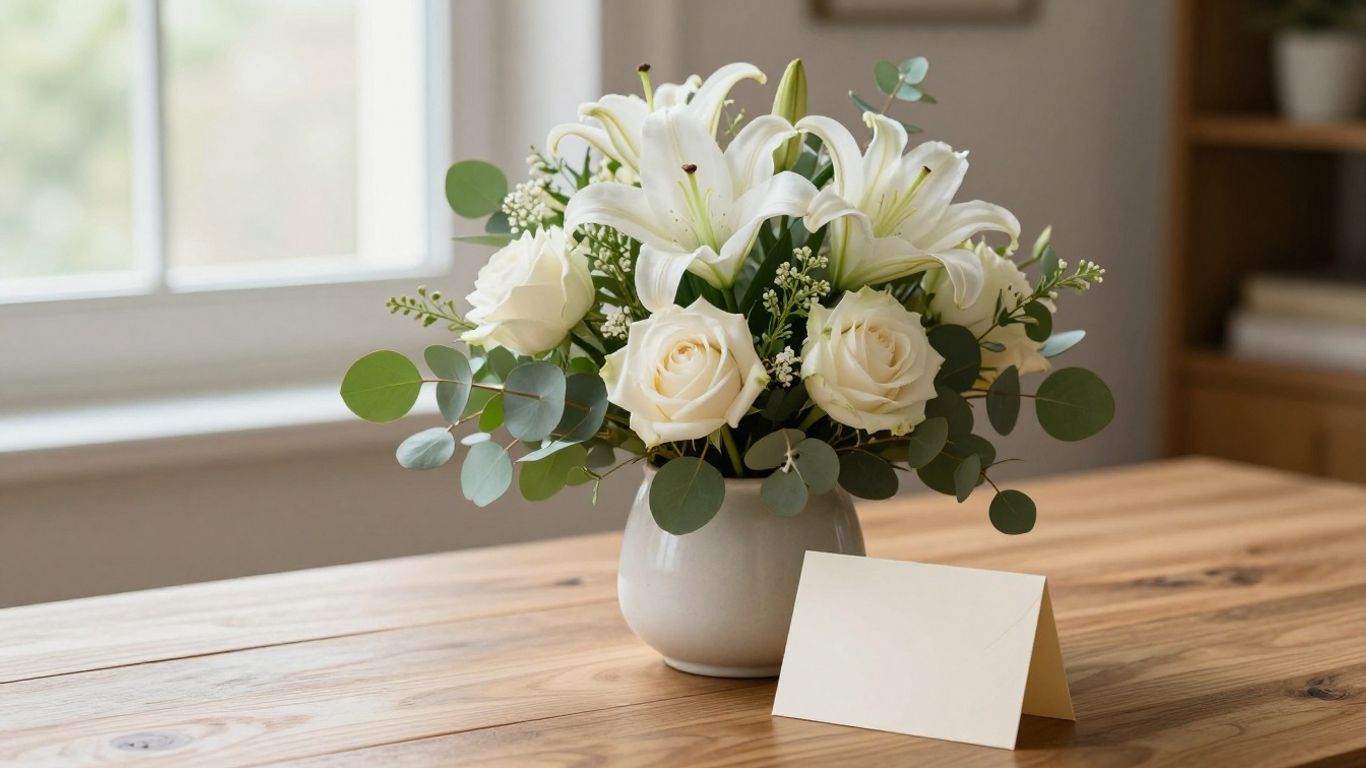
Traditional sympathy flowers and their symbolism
Lilies, roses, carnations, chrysanthemums, orchids, and hydrangeas are commonly considered for sympathy arrangements. White lilies and roses can suggest peace and remembrance, while carnations and chrysanthemums offer familiar, lasting forms. Orchids or a potted hydrangea may suit someone who would appreciate a living or longer-lasting tribute.
For a broader look at traditional choices, this funeral flower meanings guide can help you compare familiar blooms without treating any one choice as mandatory. The most suitable flower is still the one that feels respectful and connected to the family.
When to choose white, soft, or vibrant colors
White and cream flowers create a peaceful, formal impression and often suit a funeral or memorial service. Pale pink, peach, lavender, and soft blue can feel gentle when sent to a home. Deeper or brighter colors may be right when they reflect the personality of the person who died or celebrate a life remembered with energy.
Color should follow context, not a rigid rule. A vivid arrangement can be deeply loving if it recalls a favorite garden, sports team, or cheerful room, while a quiet neutral palette may better suit a formal service.
Cultural and personal preferences to keep in mind
Before ordering, consider religious customs, cultural traditions, and the family’s own wishes. Some families may prefer donations, plants, or another memorial gesture instead of cut flowers. An obituary, memorial website, or close relative may provide useful guidance when you are uncertain.
A florist or local sympathy guide can also help you avoid an accidental mismatch. For example, sympathy flower guidance offers another starting point for thinking about colors, meanings, and respectful arrangements.
Match the arrangement to the occasion
The right floral gift depends partly on where and when it will be received. Flowers for a public service have a different role from flowers delivered to a private home. Later gifts can acknowledge that grief continues after the ceremony and after visitors have gone. Let the occasion shape both the arrangement and the message.
Flowers for the funeral or memorial service
For a service, ask whether the family or venue has requested flowers and whether there is a preferred delivery window. Standing sprays, wreaths, and larger designs may be suitable for a display area, while a smaller basket can work when space is limited. Address the card clearly so the funeral home or coordinator knows which family it belongs to.
If the obituary says “in lieu of flowers,” follow that request rather than sending blooms automatically. A tribute such as a personalized memorial song may be more fitting when the family has asked for a lasting way to honor the person’s story.
Flowers sent directly to the family’s home
A home delivery can feel more personal and may be appropriate when the service is private, delayed, or already over. Choose an arrangement that can sit safely on a table or counter and include care instructions if they are useful. Confirm that someone is likely to be home, or select a delivery plan that avoids leaving flowers exposed.
Home flowers also allow a gentler design. A compact bouquet, basket, or plant can remain visible for several days without taking over the room or competing with other arrangements.
Floral gifts for anniversaries, holidays, and difficult milestones
Grief often becomes especially sharp around birthdays, anniversaries, holidays, and the first year’s milestones. Flowers sent then can say, “I remember too,” without asking the recipient to respond. A familiar bloom or favorite color may be more meaningful than a conventional sympathy design.
Keep the note simple and specific. Mention the person who died, share one kind memory if you have one, and avoid suggesting that the difficult date should be treated as a celebration unless the family uses that language themselves.
Choose the right type of floral arrangement
Arrangement style affects how the gift is received and cared for. A service may call for a formal display, while a home may suit something smaller and easier to place. Plants can offer a longer-lasting option, but only when the recipient has the time and space to care for them. Choose the form as thoughtfully as the flowers themselves.
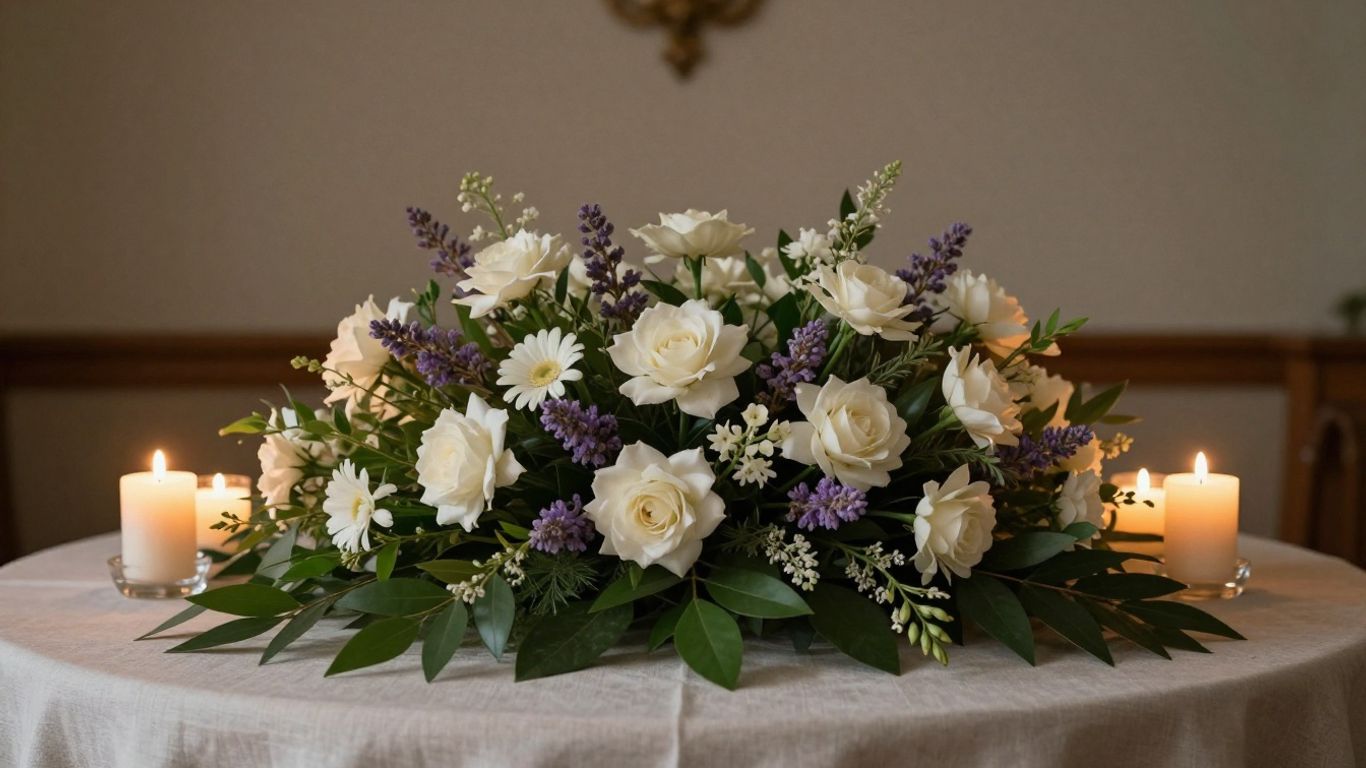
Bouquets, baskets, wreaths, and standing sprays
Bouquets are versatile and personal, though they require a clean vase and regular water changes. Baskets are often stable and easy to place, making them a practical choice for a home. Wreaths and standing sprays are more formal and visible, so they tend to suit funeral homes, churches, or memorial venues.
Before selecting a large design, ask about the setting. A meaningful arrangement should fit naturally rather than force the family or venue to find extra room for it.
Low-maintenance plants as a lasting alternative
A peace lily, orchid, succulent, or other suitable plant can remain after cut flowers fade. This option may be comforting for someone who enjoys gardening or has a sunny place to keep it. It is not automatically easier, however; even a low-maintenance plant still needs water, light, and attention.
Ask discreetly about the recipient’s preferences before choosing a plant. If you are unsure, a small arrangement or a gift card for a future garden project may place less pressure on the household.
Selecting an arrangement for the available space
Think about where the flowers will go: a narrow apartment table, a crowded kitchen counter, a reception area, or an outdoor memorial. Low arrangements are safer around conversation and dining spaces, while taller designs may be appropriate only where they will not block views. Lightweight baskets can be easier to move than glass vases.
The following quick comparison can help narrow the choice before you order. It keeps practical fit alongside emotional meaning.
| Arrangement | Works well for | Main consideration |
|---|---|---|
| Bouquet | Home delivery or a personal gesture | Requires a vase and fresh water |
| Basket | A table, kitchen, or apartment | Choose a size that is easy to move |
| Wreath | A formal service or viewing | Confirm venue preferences first |
| Standing spray | A prominent memorial display | Needs sufficient floor or display space |
After considering the setting, choose the smallest form that still expresses your intent. A well-placed gift is easier to live with and often feels more personal.
Personalize the gift with thoughtful details
Personalization does not require elaborate planning. A few details can make a familiar arrangement feel connected to the person and the relationship you shared. The card, flower choice, and delivery timing should work together. Small specifics are usually more moving than ornate language.
Writing a meaningful sympathy card
A good sympathy card can be only a few sentences. Name the loss, express your care, and offer support without promising to fix what cannot be fixed. If you knew the person who died, include a brief memory or quality you admired.
Try language such as, “I am so sorry for your loss. I will always remember her kindness, and I am thinking of you.” If you offer help, make it concrete: a meal, a ride, a phone call, or an errand is easier to accept than “Let me know if you need anything.” For more guidance on wording, explore this sympathy card advice.
Including favorite flowers or colors
Favorite flowers can turn a conventional gesture into a personal remembrance. Perhaps the person grew roses, loved tulips, or wore a particular shade often. You can mention the connection in the card so the family understands why you chose it.
When you do not know a favorite, use a restrained palette and let the arrangement feel peaceful. Avoid guessing at personal preferences based only on tradition when a relative or close friend could answer the question.
Adding practical or comforting companion gifts
A meal, grocery delivery, handwritten note, or memorial donation may be useful alongside or instead of flowers. The best companion gift depends on what the household can receive and what would genuinely reduce a burden. Even a small offer can help if it is specific and easy to coordinate.
Some families prefer a durable memorial object or a contribution to a chosen cause. A guide to lasting alternatives to flowers may help when the family has requested something other than a floral display. Avoid sending several unrelated gifts simply to make the gesture seem larger.
Arrange delivery with care and respect
Delivery is part of the message. A beautiful arrangement that arrives at the wrong address or during a private ceremony can create stress. Take a few minutes to confirm the details and communicate any uncertainty to the florist. Consider the family’s privacy as carefully as the delivery date.
Timing the delivery around the service
For a funeral or memorial, order early enough to allow for preparation and possible delays. Ask the funeral home or service coordinator when flowers should arrive, especially if the ceremony is held at a place with limited receiving hours. For a home delivery, a day after the service may be more useful than another arrangement arriving during the busiest period.
If timing is uncertain, a florist can often advise you about the safest delivery window. A later arrangement can also acknowledge the family once the immediate rush has passed.
Confirming the recipient and delivery location
Use the recipient’s full name, address, apartment or unit number, and a reliable phone number when appropriate. Make clear whether the flowers are for the family, a particular household member, or the service itself. Double-check spelling on the card; a small error can feel jarring in a sensitive moment.
If the family has moved temporarily or is staying with relatives, send the arrangement where it will actually be received. When privacy is a concern, ask a trusted contact before placing the order.
Handling special instructions and venue restrictions
Some venues limit standing displays, glass containers, strong fragrances, or deliveries during services. Families may also request no flowers, specific charities, or a certain type of tribute. Treat those instructions as part of the family’s wishes, not as a minor preference.
You can pass along notes about pets, access codes, allergies, or safe placement. Clear instructions help the florist make a considerate delivery rather than leaving the recipient to solve logistical problems.
Avoid common sympathy flower mistakes
Most missteps come from acting quickly without checking context. The intention may be loving, but the recipient still has to live with the arrangement, the message, and the timing. A short pause before ordering can prevent avoidable discomfort. When in doubt, ask someone close to the family.
Overlooking allergies, pets, or household sensitivities
Strong fragrances can be difficult for people with sensitivities, and some homes include pets or children who may be exposed to unsafe plants. Ask the florist about a lower-fragrance option and keep arrangements away from pets when the recipient has animals. A sealed vase or basket may also be easier than loose flowers.
Do not assume that a traditional flower is suitable for every household. A neutral arrangement, plant-free gift, or practical support may be kinder when health and safety are uncertain.
Using humor or overly cheerful messaging
Even if the person who died was funny or energetic, humor in a first sympathy message can miss its mark. Avoid forced positivity, clichés about everything happening for a reason, or language that tells someone how to feel. Acknowledge the pain before sharing a warm memory.
A bright flower choice can still be appropriate when it reflects the person’s character. The card should make that connection clear rather than sounding as if the loss is being minimized.
Sending flowers when another form of support may be more appropriate
Flowers are not always what a family wants or needs. They may have asked for donations, be traveling, lack room, or feel overwhelmed by repeated deliveries. In those cases, a meal, a specific offer of help, a donation, or a personal note may be a more respectful choice.
Practical support can take many forms, from arranging family-safe yard care to helping with an ordinary household task. Other interests may call for a different kind of gift, such as thoughtful gifts for new mothers or home-service planning advice, but the same principle applies: choose something that genuinely fits the recipient rather than sending a generic gesture. A supportive gift is measured by care, not by size or price.
Conclusion
Choosing a supportive floral gift for loss is less about following a perfect rule than noticing what the family may need, what the setting allows, and what feels true to your relationship. Select flowers with care, write plainly, confirm delivery details, and stay open to another form of support when flowers are not the right fit. A quiet, sincere gesture can carry real comfort.
Frequently Asked Questions
What flowers are most appropriate for sympathy?
Lilies, roses, carnations, chrysanthemums, orchids, and hydrangeas are familiar choices, but no flower is universally required. Consider the family’s preferences, cultural customs, and the setting before deciding.
Are white flowers always the best choice for loss?
White flowers are calm and traditional, yet soft colors or brighter blooms may be more personal. Choose a palette that respects the occasion and reflects the person being remembered.
Should sympathy flowers go to the funeral or the family’s home?
Either can be appropriate. Send flowers to the service when the family welcomes formal displays, or choose home delivery when a private, personal gesture is more suitable.
What should I write in a sympathy card?
Express your sorrow, name the person who died when appropriate, and offer sincere support. A short memory or a specific offer of help can make the message feel personal.
Is a plant a good alternative to cut flowers?
A plant can be meaningful for someone who enjoys caring for greenery and has suitable space. Ask about preferences first, since a plant still creates a responsibility for the recipient.
How soon should sympathy flowers be delivered?
For a service, confirm the venue’s receiving hours and preferred delivery window. For a home, delivery after the busiest days may be welcome, especially if many arrangements have already arrived.
What can I send instead of flowers?
Consider a meal, a donation requested by the family, a handwritten note, or a specific offer of practical help. The best alternative is one that reduces a burden or honors the person in a way the family values.