
Key Takeaways
A supportive floral gift for loss should feel considerate, manageable, and true to the person being remembered.
- Let the recipient’s relationship and preferences guide the gesture.
- Choose colors and flowers for their feeling, not just their symbolism.
- Match the arrangement to the home, workplace, or funeral service.
- Keep the note sincere, specific, and free of pressure.
- Consider practical or lasting alternatives when flowers are not suitable.
Understand what makes a floral gift supportive
Flowers cannot remove grief, but they can offer a quiet reminder that someone cares. The most thoughtful choice is rarely the largest or most elaborate one. It is the gesture that respects the family’s circumstances while acknowledging the person who died. Before choosing stems or a container, pause to consider what would feel gentle rather than overwhelming.
Balance comfort, remembrance, and simplicity
A good sympathy gift holds three ideas together: comfort for the living, remembrance of the person, and simplicity for a family with little spare energy. A modest bouquet can be just as moving as a formal display when it arrives with warmth and no expectation of a response. A quiet gesture matters because grief often makes even ordinary decisions feel difficult.
Think about the atmosphere you want to create. Soft, open flowers may bring calm to a room, while a familiar flower can evoke a treasured garden, season, or memory. The goal is not to decode a universal floral language, but to choose something that feels personal without becoming overly intimate.
Consider the recipient’s relationship with the person who died
Your relationship with the recipient should shape the scale and tone of the gift. A close family member may appreciate a personal arrangement with a handwritten memory, while a colleague or neighbor may prefer a smaller bouquet and a brief note. If you knew the person who died, mention that connection naturally rather than assuming the family wants a detailed tribute.
The right choice can also depend on whether the loss was sudden, expected, or connected to a long illness. You do not need to explain or interpret the circumstances. Simply allow the relationship to guide how much you say and how prominently you place your gesture.
Choose a gesture that does not create extra pressure
Someone grieving may not have the energy to answer messages, arrange flowers, or care for a demanding plant. Choose a gift that can be received without a task attached to it. A delivery notification, a request for a thank-you note, or an elaborate care routine can unintentionally add strain.
Keep your message open-ended. “No need to respond—I’m thinking of you” gives the recipient room to accept the care without managing your feelings in return. That small kindness often makes a simple floral gift feel more supportive.
Respect cultural, religious, and personal preferences
Flower customs vary widely, and personal preferences matter more than assumptions. Some families welcome flowers, some request donations instead, and others may avoid particular colors, scents, or arrangements for cultural or religious reasons. Check the obituary, service details, family website, or a trusted relative before ordering.
If you are uncertain, ask a simple question: “Would flowers be welcome, or is there another way the family would prefer support?” A brief check is more respectful than relying on a general rule about what sympathy flowers should look like.
Select flowers that communicate sympathy
Flower choice can be meaningful, but symbolism is not a strict code. Color, texture, fragrance, and familiarity all affect how an arrangement feels in a room. If you want more background on traditional choices, this guide to funeral flower meanings can offer a starting point without replacing your knowledge of the family.
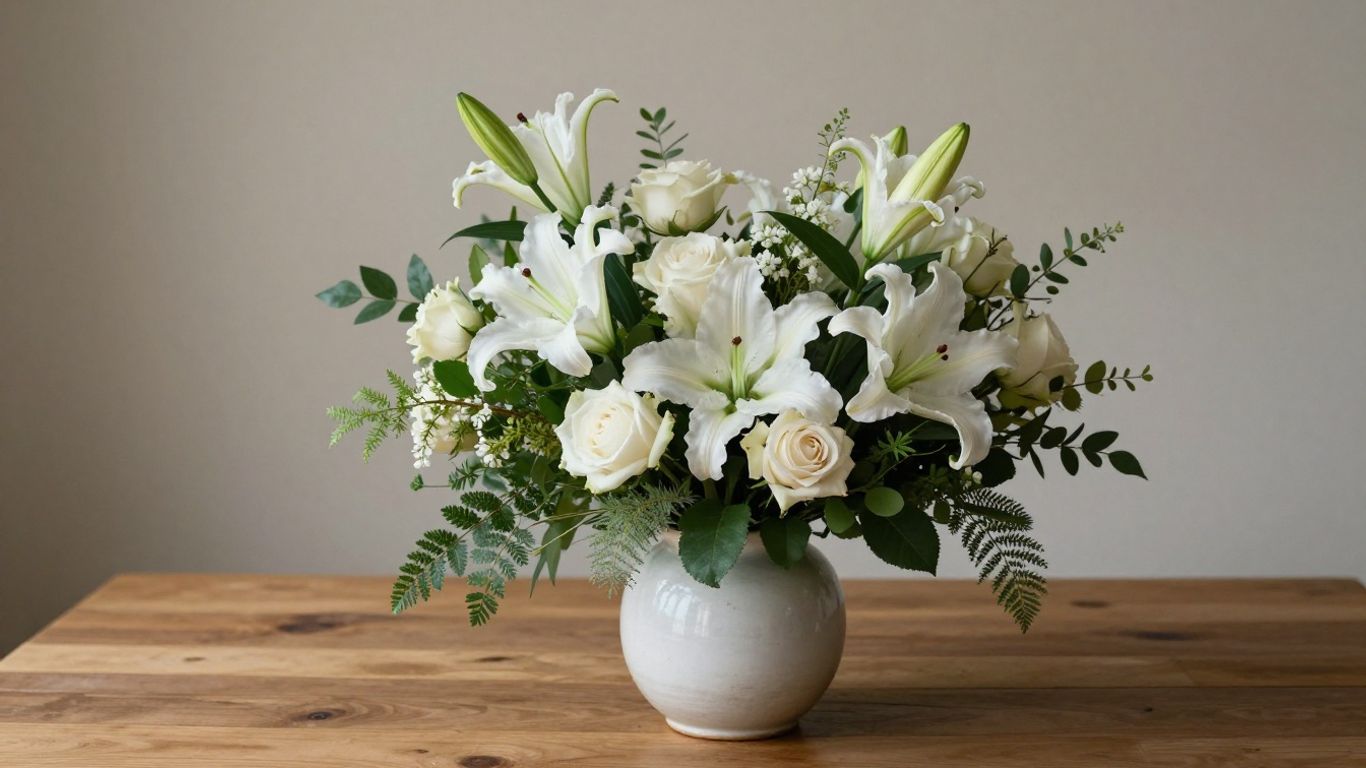
White flowers for peace and remembrance
White blooms are often chosen for their calm, clean appearance. Lilies, roses, carnations, orchids, and many seasonal flowers can create a peaceful arrangement, especially when the family has expressed a preference for a traditional or formal tribute. Their simplicity also makes them suitable when you want to offer care without making assumptions about the deceased.
Be mindful of fragrance. Strongly scented flowers may be difficult for someone who is sensitive to perfume or spending long hours in a small room. When in doubt, ask the florist for a restrained, lightly scented design.
Soft pastel blooms for warmth and compassion
Peach, blush, lavender, pale yellow, and soft pink can bring warmth without feeling festive. These colors may suit a home arrangement, where the gift is meant to feel like a tender presence rather than a ceremonial display. A mixture of gentle tones can also feel less formal for a friend, coworker, or extended family member.
Pastels are not automatically right for every person, of course. Consider the recipient’s taste and the mood of the household. A favorite color or familiar flower can be more comforting than a conventional palette.
Meaningful flowers connected to the deceased
The most affecting flower may be one tied to a memory: roses from a backyard, tulips associated with spring, or a plant the person cared for. You might ask a family member which blooms were meaningful, or simply include a short explanation in your note. Personal context gives the arrangement a reason for being there.
A flower does not need an established symbolic meaning to belong in a memorial. Sometimes its value comes from recognition—the way it recalls a favorite room, holiday, hobby, or ordinary day.
When bright colors may or may not be appropriate
Bright flowers can be welcome when the family is celebrating a vivid personality or asking for a life-affirming service. They may feel especially fitting for someone known for gardening, color, or cheerful gatherings. In other situations, bold shades may seem too celebratory, particularly when you do not know the family well.
Use the service information as your guide. If the family has requested a specific color or asked guests to reflect the person’s personality, follow that direction. Otherwise, a balanced arrangement with one brighter accent can acknowledge joy without dominating the gesture.
Choose the right floral arrangement
The form of an arrangement matters as much as the flowers inside it. A display intended for a funeral service serves a different purpose from one sent to a kitchen table or office. Consider where it will go, who will move it, and whether the recipient has room or time to care for it.
A florist can usually adjust the size, container, fragrance, and delivery destination. You can also consult a sympathy flower guide for ideas about arrangements and card wording, then adapt the choice to the person you know.
Bouquets for a personal expression of care
A vase arrangement or hand-tied bouquet often works well when you are sending flowers directly to the home. It feels personal and can be placed where the recipient will see it during ordinary moments. Choose a manageable size if the household is likely to receive several gifts.
A bouquet is also a natural choice when your main purpose is to say, “I’m here with you.” It does not need a formal shape or a large ribbon. A thoughtful container and a clear delivery plan may matter more than an impressive presentation.
Wreaths and standing sprays for funeral services
Wreaths, standing sprays, and other formal tributes are designed for a service or visitation. They can be appropriate when you are honoring the person publicly, contributing with a group, or following the family’s established arrangements. Confirm the service location and any stated preferences before choosing one.
Formal pieces can be larger and more visible than home bouquets, so include the deceased’s name and the sender’s name exactly as the funeral staff requests. If several people are contributing, coordinate first to avoid duplicate or unsuitable displays.
Plants for a lasting and low-maintenance tribute
A plant can offer a living reminder, but it should not be treated as automatically easier than cut flowers. Some plants need regular light, watering, or repotting, and a grieving household may not want another responsibility. Choose a durable, reasonably sized plant only when you know it will suit the recipient’s home and habits.
Ask whether the family has outdoor space if you are considering a future garden memorial. A plant that can eventually be moved outdoors may be meaningful, but only if the recipient has chosen that kind of remembrance for themselves.
Small arrangements for the home or office
A compact arrangement can be ideal for a coworker, neighbor, or person living in a smaller space. It can sit on a desk, entry table, or bedside table without requiring furniture to be rearranged. Smaller does not mean less caring; it can show that you considered the recipient’s daily environment.
For an office delivery, keep the design discreet and verify that flowers are allowed. A neutral container and a short card may be more comfortable than a conspicuous display during a difficult week.
Personalize the gift with thoughtful details
The card often stays with the recipient longer than the flowers do. A few honest sentences can make a conventional arrangement feel distinctly chosen. Personalization does not require eloquence; it requires attention to the person, the relationship, and what you can genuinely offer.

Write a brief and sincere sympathy message
Start with the person’s name and acknowledge the loss plainly. You might write, “I’m so sorry for your loss. I’m thinking of you and your family,” then add your name. Avoid trying to find a perfect explanation for death or filling the card with polished phrases that do not sound like you.
If you knew the deceased, name one quality or memory. If you did not, focus on the recipient’s pain and your care for them. A short message is enough when it is sincere.
Include a memory or specific offer of support
A specific memory can be a gift in itself. Mention the way the person welcomed guests, told stories, tended a garden, or made people laugh. Keep the memory kind and concise, giving the family something recognizable rather than asking them to relive a difficult moment.
Offers of help work best when they are concrete. These are easier to accept than a broad promise to help with anything:
- Drop off dinner on a named evening.
- Pick up groceries or prescriptions.
- Handle a school, pet, or household errand.
- Sit quietly with the recipient without expecting conversation.
A specific offer turns sympathy into practical care. Give the recipient permission to decline, and follow through only if they welcome it.
Consider the recipient’s home, schedule, and care needs
Before ordering, think about pets, allergies, limited mobility, travel, and the amount of space available. A heavy vase may be difficult to move, while loose stems may require arranging at once. You can ask the florist for a stable container, low-maintenance flowers, or a smaller design.
Timing matters as well. A delivery during a funeral gathering may be useful for the service, but a later arrangement can provide companionship after visitors have gone. Choose the moment that best fits the recipient rather than the moment that is easiest for you.
Avoid language that minimizes grief
Well-meant phrases can hurt when they suggest that the recipient should already be coping. Avoid telling someone to stay strong, move on, or look for a hidden reason. Do not compare their loss to someone else’s or insist that time will quickly fix the pain.
Instead, acknowledge what is true: “This is heartbreaking,” “I’m here,” or “You do not have to answer.” The message does not need to make grief smaller. It only needs to make the recipient feel less alone.
Plan delivery with sensitivity
Delivery is part of the gift, not an afterthought. A beautiful arrangement can become a burden if it arrives at the wrong place, during a private ceremony, or without enough information for the recipient to receive it. A few quiet checks can prevent unnecessary complications.
If you need a broad overview of delivery considerations, sympathy flower delivery options may help you compare the kinds of destinations and timing commonly offered. Still, confirm the family’s actual plans before placing an order.
Decide when to send flowers
Flowers may arrive before a service, during the visitation period, on the day of the funeral, or after guests have left. There is no single correct window. Sending them soon can communicate immediate care, while sending them later can remind the recipient that support continues beyond the ceremony.
If the obituary gives a preferred date or “in lieu of flowers” request, follow it. When no guidance is available, a home delivery after the service may be a gentle option, especially if the funeral home is already receiving many arrangements.
Send arrangements to the home, funeral home, or service
A funeral home or place of worship may have specific rules about deliveries, setup, and collection afterward. A home delivery is more private and may be preferable for a close friend or family member. An office delivery can be suitable for a colleague, provided it will not embarrass or inconvenience them.
Ask where the family will actually be present. If they are traveling, staying with relatives, or moving between locations, a service delivery may be more reliable than sending flowers to an empty house.
Confirm delivery details and timing
Use the recipient’s full name, a complete address, and a phone number when appropriate. Include the service name and start time for funeral-home deliveries, and ask whether the florist can deliver within the venue’s receiving hours. These details protect the recipient from having to solve a preventable problem.
Before confirming, check the card message, delivery date, container size, and substitution policy. If a particular flower is unavailable, ask for a similar tone and style rather than an unrelated replacement.
Coordinate with family or funeral staff when appropriate
A close family member, funeral director, or service coordinator may know what is welcome and where it should go. Asking does not diminish the thought behind your gift. It shows that you want your support to fit the family’s plans.
Group gifts benefit especially from coordination. One person can collect names for the card, confirm the budget, and make sure the arrangement is addressed correctly. This keeps the gesture unified and reduces repeated questions for the grieving family.
Consider alternatives to traditional sympathy flowers
Flowers are meaningful, but they are not the only way to express sympathy. A family may request donations, have limited space, or simply prefer a different kind of remembrance. When flowers are not suitable, the goal remains the same: offer care in a form the recipient can actually receive.
For more ideas, browse these thoughtful alternatives to funeral flowers, especially when the family has mentioned a memorial planting, handwritten note, or lasting keepsake. The best alternative follows the family’s wishes rather than trying to be unusual for its own sake.
Send a plant or living memorial
A small plant, garden starter, or outdoor memorial can mark a continuing connection with the person who died. Discuss the idea first if the memorial will require planting, space, or ongoing care. A living gift should feel like an invitation, not an assignment.
If the recipient prefers something with no maintenance, a garden stone, framed photograph, or other lasting object may be more suitable. Let their circumstances determine whether “living” truly means supportive.
Pair flowers with practical support
A meal, grocery delivery, cleaning help, or childcare can meet a need that flowers cannot. You might send a small bouquet alongside a prepared meal, or skip flowers entirely and offer a specific errand. Practical support is especially welcome when the family is handling travel, paperwork, visitors, or daily responsibilities.
Keep the offer manageable for both sides. One clearly stated action is often better than a long list of possibilities. If you are coordinating several people, a shared schedule can prevent duplicate meals and make help easier to accept.
Make a charitable donation in the person’s memory
When an obituary names a charity, contributing there is a direct way to honor the deceased. If no organization is specified, choose one connected to the person’s values only if you know them well. Send the acknowledgment to the family, but do not expect a response.
A donation can also be paired with a card or a modest arrangement. The note should explain what you chose and why, without turning the gift into a statement about your own beliefs.
Choose a nonfloral gift when flowers are not suitable
A handwritten letter, photo book, favorite recipe collection, or custom memorial song can offer a more personal form of remembrance. A personalized memorial song may suit a family seeking a musical tribute for a service, while a simple note may be the better choice for someone who wants privacy.
Other responsibilities can also shape what support looks like. For example, practical research about home-services website advice, new-mom gift ideas, mosquito control services, or an IPTV service guide may belong in a different conversation, not in a sympathy gift itself. The broader lesson is simple: choose help that genuinely fits the person’s immediate life, rather than adding an unrelated object.
A nonfloral gift is not a rejection of tradition. It is a way to make the gesture more personal, useful, or lasting when flowers would not meet the family’s needs.
Conclusion
Choosing a supportive floral gift for loss is less about finding a flawless arrangement than about paying attention. Consider the recipient, honor the person who died, keep the message sincere, and make delivery as easy as possible. Whether you send a quiet bouquet, a formal tribute, practical help, or a lasting memorial, thoughtful care is what gives the gesture its meaning.
Frequently Asked Questions
Is it appropriate to send flowers after someone dies?
Yes, flowers can be a thoughtful expression of sympathy, provided they fit the family’s preferences and any instructions in the obituary or service notice.
What color flowers are best for sympathy?
White and soft pastel flowers are common because they feel calm and gentle, but a favorite color or meaningful bloom may be more personal and appropriate.
Should sympathy flowers go to the home or funeral home?
Either can be suitable. Send them to the funeral home for a service tribute, or to the home when you want to offer a more private gesture before or after the ceremony.
What should I write on a sympathy flower card?
Keep it brief and sincere. Acknowledge the loss, say that you are thinking of the recipient, and include a specific memory or practical offer when it feels natural.
How soon should sympathy flowers be delivered?
They can be sent soon after the death, before the service, on the service date, or afterward. The best timing depends on the family’s plans and whether flowers have been requested.
Are plants a good alternative to sympathy flowers?
They can be, especially when the recipient enjoys caring for plants and has suitable space. Ask first when possible, since a plant may create more responsibility than cut flowers.
What can I send instead of flowers?
Consider a meal, practical assistance, charitable donation, handwritten letter, memorial keepsake, or another gesture that reflects the person’s wishes and the family’s immediate needs.