
Key Takeaways
A hospital bouquet should feel comforting, practical, and personal rather than simply impressive.
- Check the hospital’s policy before ordering flowers or plants.
- Choose low-fragrance, low-pollen blooms when possible.
- Match the arrangement’s size and style to the patient’s room and energy level.
- Use a stable container and make flower care easy for staff or visitors.
- If flowers are not allowed, consider a note, music, or another small comfort instead.
Understand how flowers can support hospital recovery
A thoughtful bouquet can bring a little color and familiarity into an otherwise clinical room. It gives visitors a gentle way to say, “I’m thinking of you,” without requiring the patient to respond at length. Flowers cannot replace medical care, of course, but they can make a difficult day feel less impersonal.
The phrase healing flowers for hospital is best understood as a choice guided by comfort, safety, and the recipient’s preferences—not as a promise that flowers heal an illness.
The emotional benefits of a thoughtful bouquet
Receiving flowers can remind a patient that people are keeping them in mind beyond the hospital walls. A small arrangement may become a cheerful focal point during long hours of rest, conversation, or waiting. The most meaningful gift is often a simple sign of care chosen with the patient’s circumstances in mind.
The gesture also gives family and friends a practical way to offer encouragement. A short visit with a bouquet, or a delivery accompanied by a warm note, can provide connection when someone is tired or uncertain.
How color, scent, and nature may affect mood
Color can change the character of a room. Soft whites, greens, and pale blues may feel calm, while yellow, coral, and pink can add liveliness. Scent is more complicated: a fragrance that feels pleasant to one person may be distracting or uncomfortable to another, especially in a shared room.
Natural details can also make the space feel less stark. Even a few uncomplicated stems may offer visual variety without taking over the bedside area. For broader inspiration about symbolism and hospital-friendly choices, explore this healing flowers guide.
When flowers are appropriate for different patients
Flowers may suit a patient who enjoys decorating their space and has enough energy to appreciate a visitor or delivery. They can be especially welcome during a short recovery, a milestone, or a long stay when the room has begun to feel repetitive. Still, a patient in intensive care, isolation, or immediate post-operative recovery may have different needs.
Ask a family member when possible. If the patient is asleep, nauseated, sensitive to scent, or facing restrictions, a message or a non-floral gift may be kinder than an unexpected arrangement.
Why personal preferences matter during recovery
A favorite flower, color, or familiar garden plant can make the gift feel intentionally chosen. Some people love bright mixed bouquets; others would rather have one elegant flower or no flowers at all. Knowing the recipient’s taste matters more than following a traditional list of “best” get-well blooms.
Consider what the person normally keeps at home, as well as what might be easy for them to see from bed. Personal meaning turns a generic delivery into a small reminder of ordinary life.
Choose healing flowers for hospital rooms
The best hospital bouquet is usually tidy, manageable, and easy to enjoy at a glance. Low-fragrance flowers are often a considerate starting point, particularly when the patient shares a room or staff must work nearby. Look for an arrangement that offers color and shape without creating extra work.
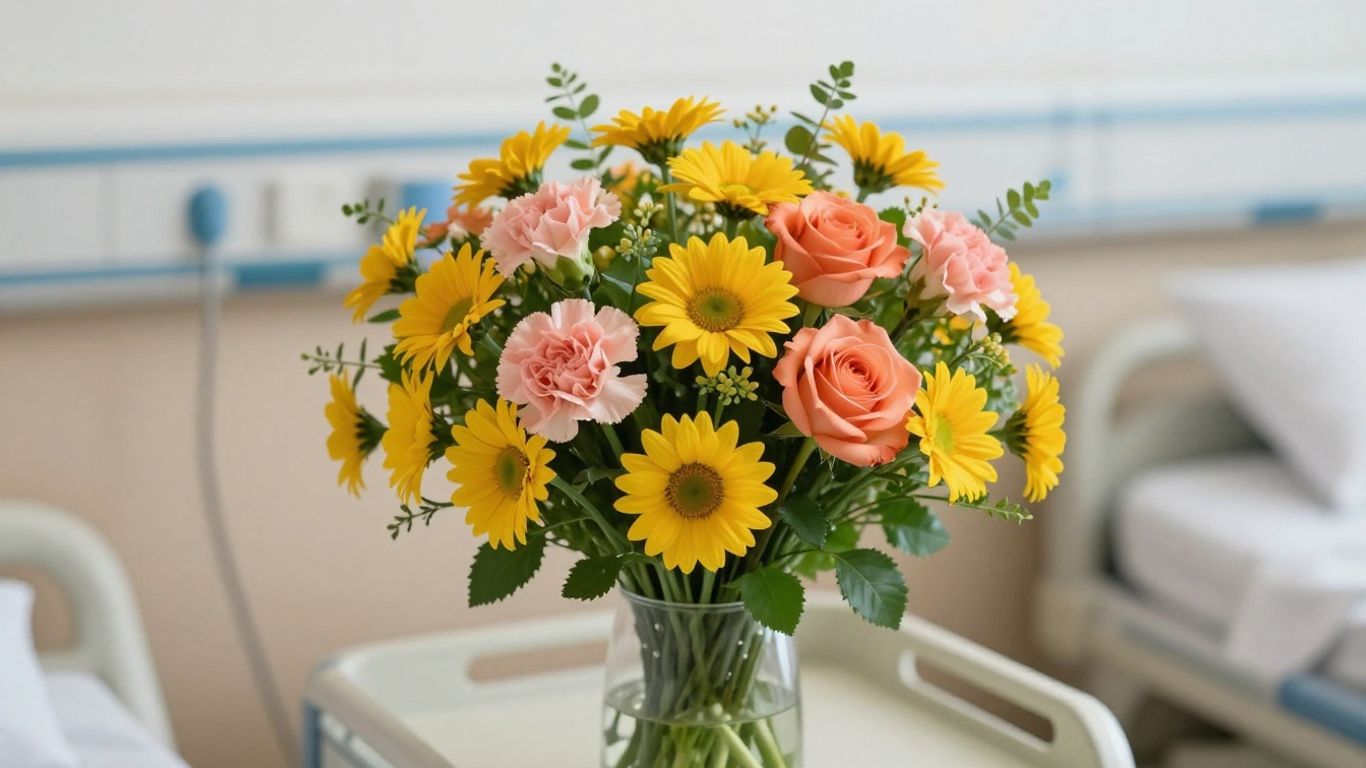
Before choosing a design, think about vase stability, available table space, and whether anyone will be present to trim stems. A Healing Harmony Bouquet is one example of a bright, mixed arrangement presented in a vase; whatever style you choose, confirm that its size and flowers suit the hospital’s rules.
Low-fragrance flowers for shared spaces
Mildly scented or nearly scentless flowers can be more comfortable around roommates, visitors, and clinical staff. Gerbera daisies, sunflowers, carnations, chrysanthemums, and many orchids are often considered for their visual appeal without a powerful perfume, though individual varieties differ.
Avoid assuming that a beautiful scent will be welcome. When in doubt, tell the florist that the arrangement is for a hospital and request a low-fragrance design with limited loose pollen.
Long-lasting blooms that require minimal care
A patient may not be able to change water or remove fading stems, so durability helps. Carnations, alstroemeria, chrysanthemums, and some lilies can last well when properly conditioned, although every bouquet depends on freshness and care.
Ask for flowers that can tolerate a few days between maintenance visits. A simple arrangement with fewer varieties is often easier to keep presentable than a dense design with many delicate stems.
Cheerful colors for encouragement and optimism
Warm colors can add energy to a quiet room, while a fresh green accent can keep the arrangement from feeling overly bright. Yellow, orange, pink, and coral are popular choices for a friendly get-well mood. If the patient prefers subdued colors, pastel shades can provide the same sense of freshness more gently.
Use the recipient’s taste as the final guide. A lively color palette is helpful only when it feels pleasant to the person receiving it.
Flowers with meaningful symbolism
Flowers have long been used to communicate affection, hope, gratitude, and remembrance. Sunflowers may suggest warmth, roses can express love in different shades, and daisies often feel light and cheerful. Meanings vary by culture and relationship, so symbolism should support—not override—the patient’s preferences.
A florist can help build a bouquet around a personal message rather than relying on a fixed floral dictionary. The note you add will usually make the meaning clearest.
Consider hospital rules and practical limitations
Hospitals are working environments, not ordinary living rooms. Some units restrict flowers, plants, vases, or particular materials because of infection-control procedures, allergies, spills, or limited space. Policies can differ between hospitals and even between departments in the same building.
A quick call before ordering prevents an uncomfortable delivery that must be removed. It also lets the florist recommend a suitable alternative if the patient is in a restricted unit.
Checking the hospital’s flower and plant policies
Ask the nursing station, reception desk, or patient’s family whether flowers are permitted on the specific unit. Confirm whether cut flowers are treated differently from potted plants and whether glass containers are allowed. If the hospital has an approved gift shop or delivery process, follow it closely.
Policies may change with the patient’s condition, so an arrangement that was acceptable in one room may not be suitable after a transfer. The safest choice is current information from the facility.
Avoiding soil, pollen, and overly fragrant arrangements
Soil can create mess and may be restricted in some care areas. Flowers with abundant loose pollen can also be inconvenient, especially if pollen drops onto bedding or equipment. Ask for cleaned stems, a contained design, and limited fragrance when ordering.
These precautions are not about making a bouquet sterile. They are about reducing avoidable irritation and cleanup in a place where many people share the air and surfaces.
Choosing bouquets that fit bedside tables
A narrow, low arrangement is usually easier to place than a wide or top-heavy one. Consider where medical devices, water cups, phones, and personal items already sit. A bouquet that blocks the patient’s view or needs frequent repositioning may become a burden.
A useful size guide is simple: the arrangement should leave room for essential items and be visible without crowding the bed.
| Hospital consideration | More practical choice | Why it helps |
|---|---|---|
| Limited bedside space | Narrow or compact bouquet | Leaves room for essentials |
| Shared room | Low-fragrance flowers | Reduces scent concerns |
| Limited visitor support | Long-lasting cut blooms | Requires less frequent attention |
| Spill risk | Stable, lightweight container | Makes handling easier |
The table is only a starting point, since each patient’s room and care plan differ. When ordering, describe the space honestly and ask the florist to keep the arrangement compact.
Accounting for allergies and infection-control concerns
If the patient or a roommate has known allergies, treat that information as decisive. Staff may also ask for flowers to be removed if they interfere with care or create a sanitation concern. Never place flowers near equipment, medication, food, or a sterile work area without permission.
A considerate sender accepts that the hospital may decline or relocate the bouquet. The purpose is to support recovery, not to create one more problem for the patient or staff.
Match flowers to the patient and occasion
The right arrangement depends on more than the words “get well.” Surgery recovery, a long admission, maternity care, and pediatric treatment all call for different levels of color, size, and practicality. The patient’s energy, privacy, and ability to care for the flowers should shape the choice.
A bouquet can be bright without being loud, personal without being elaborate, and generous without filling the room. Think about what will be comforting now, not just what looks striking in a catalog.
Get-well flowers for surgery recovery
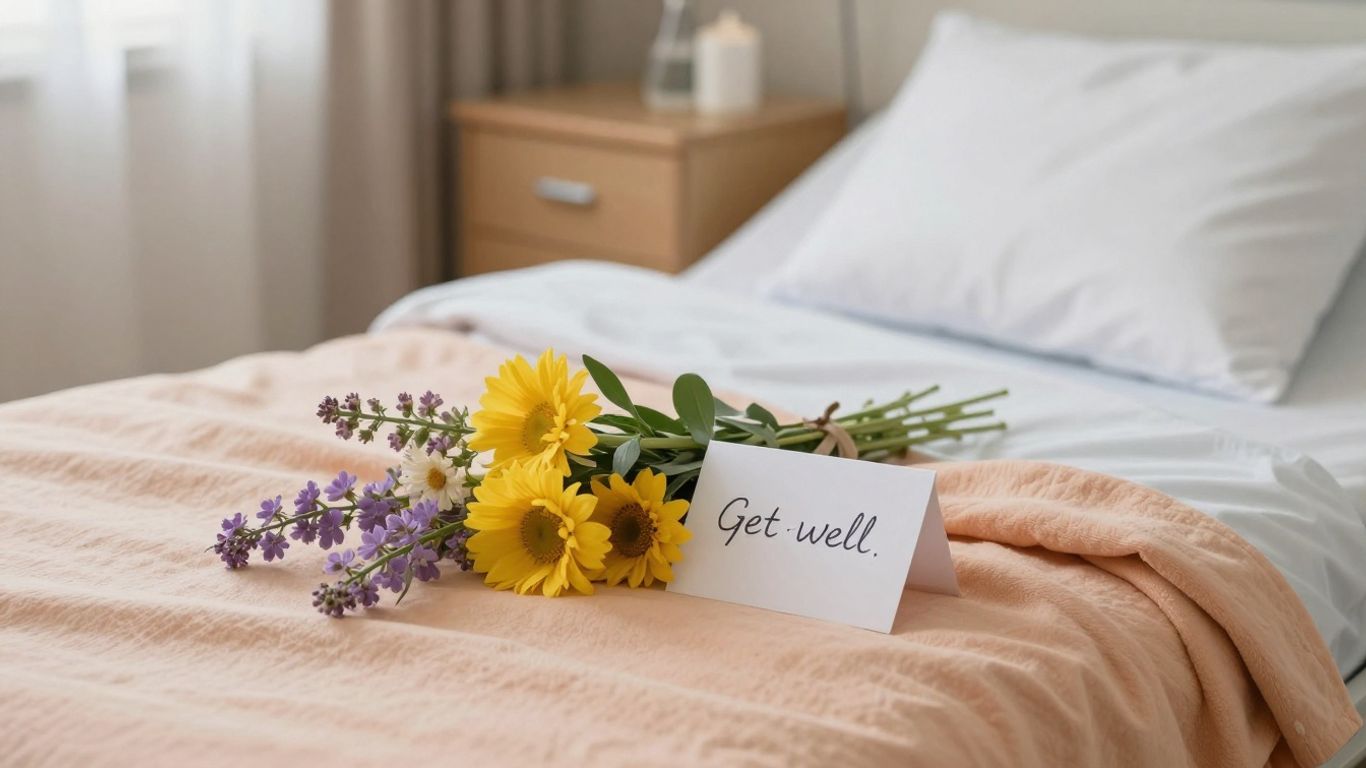
After surgery, a patient may be tired, uncomfortable, or sensitive to smells. Choose a compact arrangement with gentle colors and little fragrance, and avoid a container that requires lifting or complicated care. A short note saying that there is no need to reply can make the gift feel especially considerate.
If flowers are not permitted immediately after the procedure, arrange delivery for later or send a message first. Timing can matter as much as the bouquet itself.
Bouquets for long-term hospital stays
For a long admission, durability and variety become more useful than a dramatic first impression. A modest bouquet can be replaced or refreshed later, giving the patient small changes to look forward to. You might choose a restrained color scheme that remains pleasant over several days.
Ask the family whether the patient has space for another arrangement. During a long stay, a practical visit, a favorite snack if permitted, or a personal photo may be more welcome than additional flowers.
Flowers for maternity and new-parent visits
New parents may appreciate a cheerful bouquet, but their room can already be crowded with supplies, gifts, and personal belongings. Choose a small arrangement that can sit safely away from the baby’s bassinet and medical equipment. Avoid strong fragrance and ask whether the facility has special rules for maternity rooms.
The parent’s comfort comes first. A note that celebrates them, rather than focusing only on the newborn, can feel warm and thoughtful.
Thoughtful options for children and older adults
Children may enjoy vivid colors, familiar shapes, or a tiny arrangement that feels like it belongs to them. Older adults may prefer classic flowers, a favorite color, or a design that is easy to see from bed. In either case, keep the container stable and avoid anything with small detachable decorations.
For children who cannot receive flowers, a calm story can be a gentle alternative; these bedtime stories offer ideas for narratives that support emotional understanding. Always check with caregivers before sending an item to a pediatric or memory-care setting.
Select a safe and suitable arrangement
A hospital gift should be easy to place, move, and maintain. That means looking beyond the blooms to the container, water level, stem length, and overall weight. A beautiful arrangement is less successful if it tips easily or occupies the only usable surface.
If flowers are not appropriate, the same care can be expressed through a note, a digital message, or a small comfort chosen with permission. The gesture matters more than the format.
Cut flowers versus potted plants
Cut flowers are often simpler for a short stay because they arrive ready to display and do not require soil. Potted plants can last longer, but they may be restricted or difficult for a patient to move and maintain. They can also take up more space than expected.
For a long recovery, ask the patient or family whether a plant would genuinely be welcome after discharge. Otherwise, a well-conditioned bouquet is usually the easier hospital option.
Bouquet sizes for crowded hospital rooms
Choose a design proportionate to the room and the patient’s mobility. A small vase or a low basket can provide color without obstructing visitors or staff. Oversized arrangements may look generous at delivery but become awkward when the bedside table is needed for care.
When unsure, go smaller and more personal. A compact bouquet can still make the room feel cared for.
Containers that are stable and easy to use
A broad-based container is less likely to tip than a tall, narrow vase. Lightweight materials may be easier for a visitor to move, while a filled glass vase can be heavy and vulnerable to breaking. Ask whether the florist can supply a container that arrives already arranged and requires no assembly.
The arrangement should be easy to see and easy to relocate. Stability is a small detail, but it prevents spills and unnecessary handling.
Alternatives for patients who cannot receive flowers
Some patients may be in units where flowers are prohibited, or they may have allergies or personal reasons for declining them. You can still send encouragement in a form that respects those limits, such as a handwritten card, a family photo, or a digital musical tribute like a Get Well Soon Song Gift.
Other gifts may suit different recipients. A pickleball birthday gift guide is not a hospital-flower substitute by itself, but it illustrates a useful principle: choose something connected to the person’s ordinary interests when the timing and setting allow it.
Order and deliver hospital flowers successfully
Delivery details deserve as much attention as flower selection. Hospitals may have multiple entrances, several buildings, and strict receiving procedures. A little preparation helps the bouquet reach the right person without creating extra calls for the family or front desk.
Use a florist familiar with hospital deliveries when possible, and share all relevant information at checkout. If an online order involves privacy or cookie questions, you can review the FLOW THE KITCHEN policy separately; it is not a substitute for confirming the delivery details with the florist.
Confirming the patient’s full name and room details
Provide the patient’s full legal or registered name, hospital name, unit, room number if available, and a reliable contact number. Check spelling carefully, especially when several people in the facility share a last name. If the room may change, ask the florist how deliveries are handled after a transfer.
Do not rely on a nickname alone. Clear information protects the patient’s privacy and gives hospital staff a better chance of routing the arrangement correctly.
Choosing a local florist or hospital gift shop
A local florist may know the building, delivery desk, and unit restrictions. A hospital gift shop may already understand the facility’s accepted containers and delivery windows. In either case, ask what substitutions may occur and whether the arrangement will arrive in a suitable vase.
A useful hospital delivery guide can help you think through fragrance, pollen, and room comfort before placing an order. The final authority remains the hospital and the florist handling the delivery.
Timing delivery around procedures and visiting hours
Avoid sending flowers during a scheduled procedure, discharge window, or late-night period. Ask the family when the patient is most likely to be awake and when deliveries are accepted. Same-day service may depend on order cutoffs, local capacity, and the hospital’s receiving process.
If the timing is uncertain, a next-day delivery with accurate details is often better than rushing an order. A reliable arrival is part of the thoughtfulness.
Adding a personal note without overwhelming the recipient
Keep the message warm, brief, and pressure-free. “Thinking of you and wishing you steady recovery” is enough; there is no need to ask for updates or describe frightening possibilities. If several people are sending the bouquet, sign every name clearly.
You can mention a shared memory or an ordinary plan for later. That small reminder of life outside the hospital may feel more comforting than a long speech.
Care for flowers during a hospital stay
Fresh flowers need only a little attention, but that attention may not be possible for the patient. A visitor, family member, or staff-approved helper can take responsibility for simple maintenance. Always follow hospital instructions first, particularly around sinks, equipment, and bedside surfaces.
The goal is to keep the arrangement pleasant without turning it into a chore. If care becomes difficult, it is perfectly reasonable to remove the bouquet or take it home.
Simple instructions for keeping blooms fresh
Place flowers away from direct heat, strong sunlight, and vents when the room setup allows. Remove leaves below the waterline and follow any care card supplied by the florist. Avoid adding home remedies unless the florist specifically recommends them.
A visitor can trim the stems slightly with clean scissors and check the water during a visit. Small, regular actions usually work better than trying to revive an arrangement after it has wilted.
Replacing water without making a mess
Ask before moving the vase, and use a nearby sink or a small pitcher if the hospital permits it. Pour slowly, keep water away from cords and equipment, and wipe the bedside surface immediately if anything spills. If the vase is heavy, ask another adult to help rather than lifting it beside the bed.
Some arrangements are best refreshed by a florist. When in doubt, leave the bouquet in place and contact the sender or shop for advice.
Knowing when to remove wilting flowers
Remove flowers when they become slimy, shed heavily, smell unpleasant, or begin to obscure the patient’s space. Wilting is not a failure; flowers are temporary gifts, and taking them away at the right time keeps the room comfortable. Ask the patient before discarding anything, since a particular stem may have sentimental value.
If the patient is transferred, discharged, or placed under new restrictions, check whether the arrangement can remain. Hospital staff may need it moved quickly.
Taking the bouquet home after discharge
A family member can take the bouquet home if the patient wants to keep enjoying it. Recut the stems, clean the vase, and place the flowers in fresh water as soon as practical. Some blooms may last several more days, while others may be ready for composting or disposal.
If the bouquet cannot travel, photograph it or save a favorite stem only if the flower is suitable for drying. The memory of the gesture can remain even after the flowers are gone.
Conclusion
The most thoughtful hospital bouquet is one that respects the patient, the care setting, and the practical limits of the room. Choose gentle, manageable flowers, confirm the hospital’s policy, and let personal preference guide the final design. Whether the gift is a compact arrangement or a different kind of message altogether, care is clearest when it arrives in a form the recipient can comfortably receive.
Frequently Asked Questions
What are the best flowers to send to a hospital?
Choose fresh, compact flowers with mild or minimal fragrance, limited loose pollen, and a container that is stable and easy to move. The patient’s preferences and the hospital’s policy should guide the final choice.
Are flowers allowed in every hospital room?
No. Some hospitals or units restrict cut flowers, potted plants, soil, glass containers, or all floral arrangements. Confirm the policy for the specific unit before ordering.
Which flowers have the least fragrance?
Many carnations, gerbera daisies, chrysanthemums, sunflowers, and orchids have relatively mild scents, but varieties differ. Ask the florist for a low-fragrance design intended for a shared clinical space.
Are potted plants suitable for hospital patients?
They can be suitable in some settings, particularly for a longer stay, but soil and plant care may be restricted. Cut flowers are often simpler for short admissions, while the hospital’s rules remain the deciding factor.
What size bouquet works best for a hospital room?
A narrow or compact bouquet is usually easiest to place on a bedside table. It should not block equipment, the patient’s view, or space needed for food, medication, and personal items.
What should I write in a get-well flower card?
Keep the message brief and reassuring, such as wishing the person comfort and a steady recovery. Avoid asking them to respond or providing unsolicited medical advice.
What can I send if flowers are not permitted?
Consider a handwritten card, family photograph, digital message, or another small gift approved by the patient and facility. The best alternative is personal, low-maintenance, and easy for the recipient to enjoy.