Key Takeaways
Funeral flowers can offer quiet comfort when words feel difficult to find. A thoughtful choice considers the family, the service, the setting, and the timing.
- Choose an arrangement that suits the service or the family home.
- Let the deceased’s personality and preferences guide the flowers and colors.
- Confirm the delivery address, service time, and florist deadline carefully.
- Respect cultural and religious customs before selecting a design.
- A sincere message matters more than the size or price of the arrangement.
Understanding the role of funeral flowers in Altona
Sending sympathy flowers for funeral Altona families can be a gentle way to acknowledge loss and offer support. Flowers do not remove grief, but they can bring warmth to a difficult room and show that the family is not facing the moment alone. The most suitable tribute is usually one chosen with care rather than according to a strict rule.
How sympathy flowers express support and remembrance
A floral tribute communicates presence when a phone call or written message may feel inadequate. Its shape, color, and scale can quietly honor the person who has died while offering something beautiful for mourners to see. Even a modest bouquet can carry real meaning when it comes with a personal note and sincere thought.
The difference between funeral, memorial, and sympathy arrangements
Funeral flowers are usually designed for the service itself and may be sent to a funeral home, church, or cemetery. Memorial arrangements can be more personal because they are often chosen for a gathering held later, while sympathy flowers sent to the home are intended primarily for the immediate family. Knowing the setting helps you select a size and style that feels appropriate.
When flowers may be especially meaningful to the family
Flowers can be particularly welcome during the first days after a death, when practical tasks and visitors can make private grief feel overwhelming. A home arrangement may continue to offer comfort after the service has ended. If many people are sending tributes, a smaller design or a potted plant may be easier for the family to manage.
Cultural and religious considerations to keep in mind
Customs around mourning flowers vary widely, so it is sensible to ask a close relative, celebrant, or funeral director if you are unsure. Some families prefer white flowers and restrained designs, while others welcome colors that celebrate a lively personality. The family’s wishes should take precedence over assumptions about what funeral flowers are supposed to look like.
Choosing the right type of sympathy arrangement
The arrangement should fit both the occasion and the place where it will be received. A large tribute may suit a formal service, while a compact vase can be kinder for a family living with limited space. Before ordering, consider who will see the flowers, how long they will remain there, and whether the venue has any restrictions.
Casket sprays and standing funeral wreaths
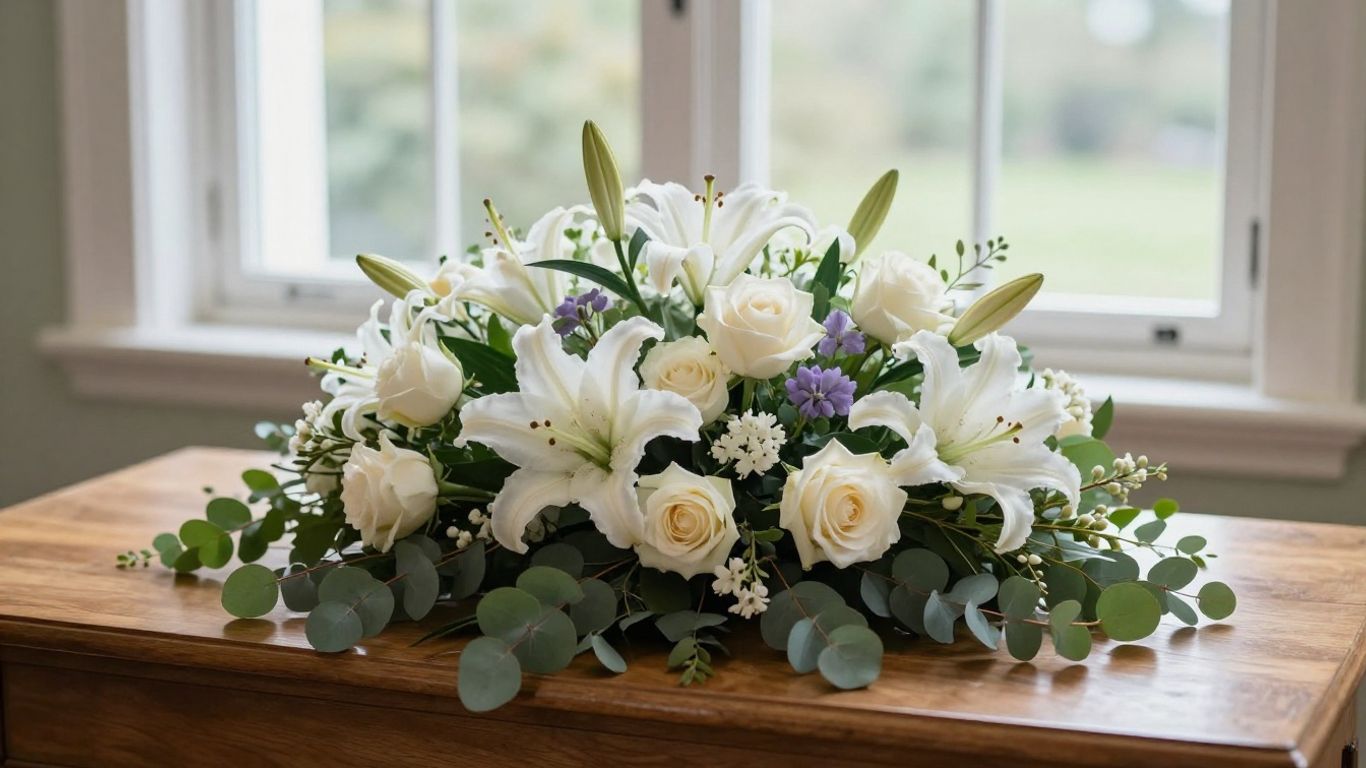
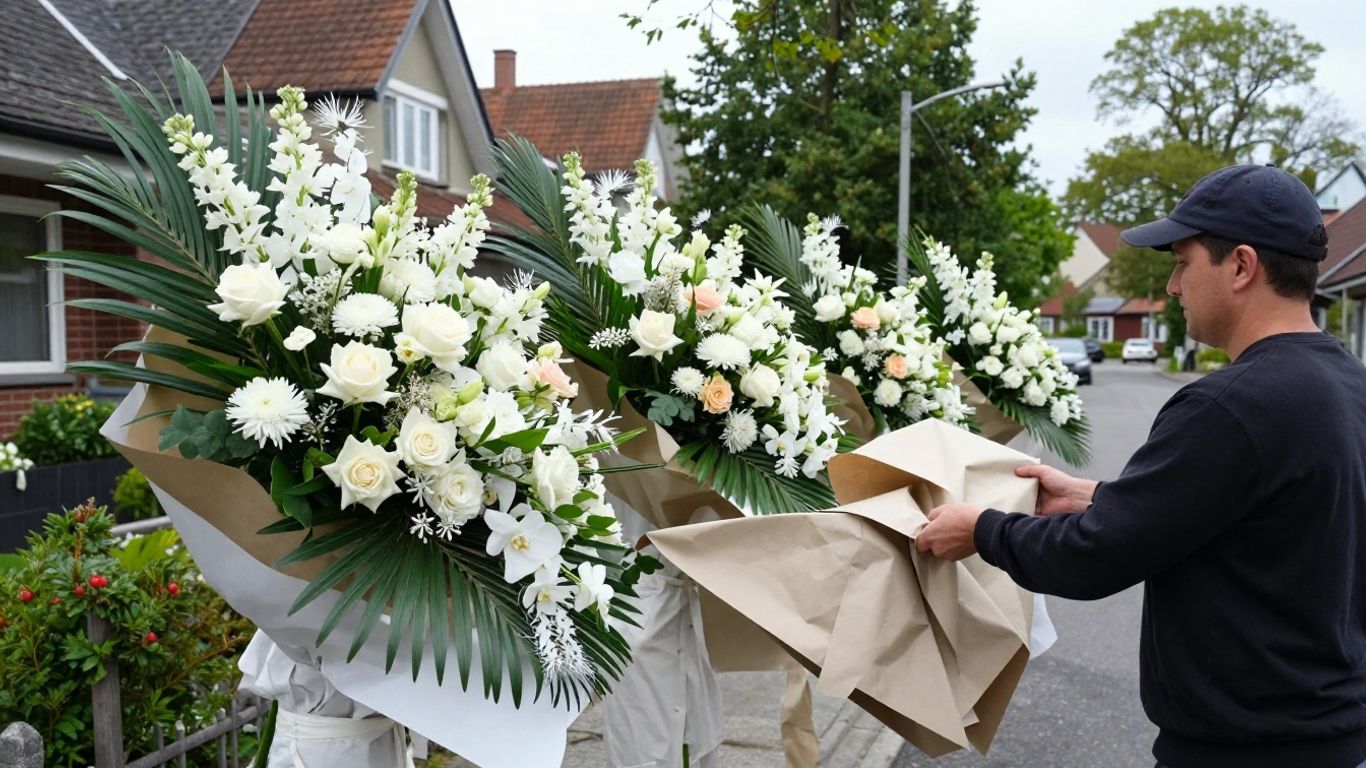
Casket sprays are placed over or near the casket and are generally selected by immediate family members. Standing wreaths and sprays are more visible designs, often sent by extended family, friends, or an organization. Because these arrangements occupy significant space, confirm with the funeral home whether a particular size or stand is suitable.
Funeral baskets and vase arrangements
Baskets and vase arrangements are versatile choices for a service, visitation, or reception. They can be placed on a table, beside a photograph, or in another designated area without dominating the room. A vase arrangement may also be easier for the family to take home after the ceremony.
Wreaths, crosses, and other traditional designs
Circular wreaths can suggest continuity and remembrance, while crosses and other religious forms may be meaningful when they suit the family’s faith. Traditional designs often use calm colors and balanced shapes, but they need not feel impersonal. Ask about the family’s preferences before choosing a strongly religious symbol.
Smaller bouquets for the family home
A small bouquet is often the safest choice when you want to send comfort directly to the household. It can sit on a kitchen table or bedside cabinet and be enjoyed privately rather than displayed at the service. Choose a design in a manageable vase, with flowers that will not require complicated care.
Selecting flowers, colors, and meaningful details
There is no single correct flower for mourning. Some people prefer traditional blooms, while others choose seasonal flowers, native varieties, or colors associated with the person who died. The strongest choices usually feel calm and deliberate, with enough personality to make the tribute individual.
Popular flowers for sympathy arrangements
Roses, lilies, chrysanthemums, carnations, and orchids are all common choices for sympathy work, though availability changes with the season. White flowers create a quiet, classic appearance, while softer pinks, blues, and lavender can add tenderness. If fragrance may be an issue at the venue or in the home, ask the florist for a less strongly scented design.
What different flower colors can communicate
Color can shape the feeling of an arrangement, but meanings are not fixed. White often suggests peace and remembrance; pink can feel gentle and affectionate; blue may bring a sense of calm; and brighter colors can celebrate a warm, energetic life. The family’s own associations matter more than a traditional color dictionary.
A simple color guide can help narrow the options without making the decision feel mechanical:
| Color direction | General feeling | A suitable use |
|---|---|---|
| White and cream | Peaceful and restrained | Formal service or memorial |
| Soft pink and lavender | Tender and personal | Tribute from a close friend |
| Blue and white | Calm and reflective | Home arrangement or visitation |
| Seasonal bright tones | Warm and celebratory | A life remembered for its energy |
Use the table as a starting point, then adjust it to the person and the family. A favorite color or familiar garden flower may say more than a conventional palette.
How to choose a style that reflects the deceased
Think about the person’s interests, home, and way of living. An understated arrangement may suit someone private, while loose seasonal flowers could feel right for a keen gardener or nature lover. Personal details can matter deeply when they are used with restraint, such as a favorite bloom, a familiar color, or foliage from a meaningful landscape.
Adding a personal message or keepsake
Keep the card message simple and honest: mention a memory, offer your condolences, or let the family know you are thinking of them. Avoid trying to explain the loss or find a perfect phrase. A small keepsake can be appropriate if you know the family well, but flowers and a thoughtful note are entirely sufficient.
Planning sympathy flower delivery in Altona
Delivery details deserve as much attention as the arrangement itself. Funeral services often follow a tight schedule, and a beautiful tribute is of little help if it arrives after the ceremony. A useful funeral flower delivery guide can help you think through venue coordination, timing, and the relationship you have with the deceased.
Confirming the funeral home, church, or cemetery address
Check the complete venue name and street address before placing the order. Funeral homes may have separate entrances or receiving areas, and a church or cemetery may use a different delivery procedure. Include the deceased’s full name and the name of the service or family contact so staff can identify the tribute quickly.
Checking the service date and delivery deadline
Ask when flowers should arrive rather than assuming delivery on the service date is enough. Some venues request flowers several hours early, while others have a specific receiving window. If you are ordering from outside Altona, place the order as early as possible and repeat the deadline clearly.
Understanding same-day and scheduled delivery options
Same-day delivery can be helpful when arrangements are made at short notice, but it may depend on the florist’s cutoff time, stock, and delivery area. Scheduled delivery is generally easier for a funeral because it gives the florist more time to prepare a suitable design. If you need a Sunday delivery or another unusual time, ask before paying; local services may set different deadlines, such as those described by Altona flower delivery.
Providing accurate recipient and contact information
Give the florist the family contact’s name, phone number, and any delivery instructions you have permission to share. For a service, list the venue and the deceased’s name rather than relying on a first name alone. Read the order confirmation carefully, especially if the address has unit, building, or suburb details.
Choosing a local Altona florist
A local florist can help translate a vague request into an arrangement that fits the setting and budget. You do not need to know the names of every flower or design style before calling. Explain who the flowers are for, where they are going, when they are needed, and whether you have any preferences.
Comparing arrangement photos, sizes, and prices
Photographs are useful for comparing overall shape, fullness, and color, but they may not show the actual scale clearly. Look for dimensions and ask what is included in the listed price. A direct conversation can also clarify whether a design is intended for a casket, a stand, a table, or the family home.
Checking freshness and substitution policies
Seasonal availability means a florist may need to substitute a flower or foliage. Ask whether substitutions will preserve the original color, value, and overall style. Freshness also depends on how the arrangement is handled after delivery, so include basic care instructions when the flowers are going to a private residence.
Reviewing delivery coverage and service fees
Delivery charges can vary according to distance, timing, venue, and service requirements. Confirm whether Altona and the particular funeral venue are covered, and ask about taxes or handling fees before finalizing the order. If you are comparing several options, compare the complete delivered price rather than the arrangement price alone.
Evaluating customer reviews and florist experience
Reviews can reveal whether a florist communicates clearly, meets deadlines, and handles sensitive orders with care. Look for comments about funeral work specifically, not only birthday or wedding bouquets. For broader online research, unrelated resources such as a camping light guide, LongDistanceMovers.org, Urtopia Carbon Joy Ultra E-Bike, Three Weeks to Technology Clarity, and Clarity-GMS illustrate why the most useful information is usually the information that matches the decision at hand; they are not relevant substitutes for florist advice.
Managing the etiquette and cost of funeral flowers
Funeral flower etiquette is less about rigid rules than about being considerate. Your relationship to the deceased, your relationship to the family, and the formality of the service can all guide the choice. If you are uncertain, a florist or funeral director can often suggest a respectful option without judging your budget.
Deciding how much to spend
There is no required amount to spend on sympathy flowers. A smaller arrangement with a genuine note can be more meaningful than an elaborate tribute chosen out of pressure. Set a comfortable budget, then tell the florist whether delivery, a vase, or a stand needs to be included.
Knowing who should send flowers
Immediate family may choose casket flowers, while friends, colleagues, neighbors, and community groups often send wreaths, sprays, baskets, or bouquets. A group can sign one arrangement together, which may be practical and personal. If the family has requested donations instead of flowers, follow that request and send a card if appropriate.
Sending flowers when you cannot attend the service
Flowers can let the family know you are thinking of them even when distance, illness, or other responsibilities prevent you from attending. Send them to the home after checking that someone will be there to receive them, or arrange delivery to the funeral venue before the service. A message that acknowledges your absence without making it the focus is usually enough.
Avoiding common sympathy flower mistakes
Small details prevent most problems. Before submitting an order, check these points:
- Confirm the deceased’s full name and the exact service location.
- Ask whether the venue accepts flowers and when it receives deliveries.
- Choose a size that suits the room or the family’s home.
- Avoid strongly scented flowers if allergies or sensitivities are a concern.
- Write a clear card message and include your own name.
After ordering, keep the confirmation and delivery contact details available. If the service schedule changes, contact the florist promptly rather than waiting for the delivery day.
Conclusion
The best funeral flowers are not necessarily the largest or most traditional; they are the ones chosen with the family, the setting, and the person’s memory in mind. By checking customs, confirming delivery details, and adding a sincere message, you can offer a graceful gesture of care during a painful time.
Frequently Asked Questions
What flowers are most appropriate for a funeral?
White roses, lilies, chrysanthemums, carnations, orchids, and understated seasonal flowers are common choices. The family’s preferences and cultural traditions should guide the final selection.
Should funeral flowers be sent to the home or the service?
Send them to the service when the arrangement is intended for display there and the venue accepts deliveries. Send a smaller bouquet to the home when your main purpose is to comfort the immediate family privately.
What color flowers are best for sympathy?
White and cream are traditional, but soft pink, lavender, blue, and even brighter colors can be appropriate. Choose colors that respect the family and reflect the person being remembered.
How early should funeral flowers be ordered?
Order as soon as you know the service details, ideally at least a day or two ahead. Short-notice orders may still be possible, but they depend on stock, delivery distance, and the florist’s cutoff time.
Can I send flowers if I did not know the deceased well?
Yes. A modest bouquet or shared arrangement from colleagues, neighbors, or an organization can express care for the family without seeming excessive.
Is it acceptable to send flowers after the funeral?
Yes. Flowers sent after the service can be especially thoughtful because attention often fades while the family’s grief continues. Confirm that someone can receive the arrangement at home.
What should I write on a sympathy flower card?
Use a brief, sincere message such as an expression of sympathy, a fond memory, or an offer of support. Sign your name clearly so the family knows who sent the flowers.
Pingback: How to choose sympathy flowers Altona families can send with care
Pingback: Sympathy bouquet Altona: A thoughtful guide to choosing and sending funeral flowers